
V Torres chronicles her personal experiences and emotional growth with confidence and maturity. Her new full-length studio album, Woman, is a wholesome, yet vulnerable self-portrait of her transformative journey over the last decade and what happens when you stop trying to force solutions and opportunities and open yourself up to the universe.
“I learned so much about myself, the process, letting things be, surrendering to divine timing and trusting my ears,” Torres said. “It feels like this is the start of a new musical journey for me and I am excited to see where it takes me. I hope people dig into the record, listen to it from start to finish and realize that they are going to be okay.”
The Los Angeles-based singer, songwriter and musician blends indie/alternative rock influences with more of a heartland and country sound as she reflects on intimate experiences from her past.
Torres co-produced the album with her longtime friend and multi-platinum producer Steve Aguilar, also known as Heatmaps, whose catalog features work with The Head and Heart, Billie Eilish, Brandi Carlile, Moby, Red Hot Chilli Peppers and more.
“I’ve been in situations before where I felt muted creatively,” Torres previously stated about the project. “This time, there was safety and freedom. If something didn’t feel fully expressed, we kept working until it did.”
The lead single, “Woman,” talks about identity, resilience and the emotional weight carried through the many roles women inhabit. It’s fierce and relatable, with a catchy hook and powerful lyrics.
She channels feelings of grief and compassion on the track, “Winter Solstice,” which was written after a close friend lost her brother in a tragic accident. It examines the quiet power of simply being there for someone you love, while extending that same grace to yourself.
“That Night” switches the tone, embracing the thrill of uncertainty in the moment, and the moment when the friendship begins to blur into something real and letting the feelings of fear, excitement and vulnerability wash over you.
We recently caught up with the independent artist and producer to chat about her introspective sophomore album, available now on all streaming platforms.
Start-Track: Do you typically go by V?
V Torres: Yeah, that’s totally cool. That works for me.
Start-Track: So, I guess, what made you decide to roll with that for your artist identity?
V Torres: My name is Veronica. But, like, I did notice that every time people try to say my name, a lot of times it’s a different “V” name. So it’s like Vanessa, Victoria, anything that’s not Veronica. I correct people sometimes. Sometimes I don’t. Since I was a kid, my nickname was “V” from my parents. I figured V Torres— that’s my name. Really, it’s just a little shorter, a little more memorable. So I went with it.
Start-Track: You have a very eclectic sound that pulls from a lot of different influences. I kind of wanted to know how you would define your sound in your own words?
V Torres: My influences are heavily based on the music that I grew up on, which was really a lot of ‘60s and ‘70s rock from my parents’ collection. Singer-songwriter. Psychedelic rock. And then the big grunge movement in the ‘90s was a huge influence for me too, because I listened to so much of that music as a younger person as I got my first guitar and started developing my own style. I think a lot of it came from that. I also grew up playing basketball. I was an athlete for most of my life and there was a lot of influence through the hip-hop and R&B music I listened to in the ‘90s as well. I think that anything that touches you as a younger person and really gets inside your soul, it stays there. So for me, it was really those main influences that kind of shaped what I love. I’m also a huge fan of lyrics and as I got older and went to college, I started listening to a lot of indie-rock music that was more emotionally driven. Bands like Rilo Kiley and songwriters like Regina Spector were a big influence on me as I started to play more in my later years.
ST: Circling back, tell me more about how basketball played a role in your music.
VT: It’s fun because you know if you’re an athlete growing up, that’s kind of your life. And for me, it was my life until I got to college and I decided not to play anymore. I could have kept going, but when you’re on a basketball team and you’re in this ecosystem—it’s like you’re all working together on a common goal, and I really love that. I love the dynamics of that, and I think as I stopped playing basketball, I really still needed that in my life.
I do think that writing music, playing in a band and collaborating with people in that way is very similar and it really filled that void that I was missing when I stopped playing. So I do think that there is a lot of inspiration. You know, you can come up with a melody, lyrics, a song, but you will have to work together with other people on it. So I think that that does play a huge role in my collaborative creativity with other people, and in a very similar way.
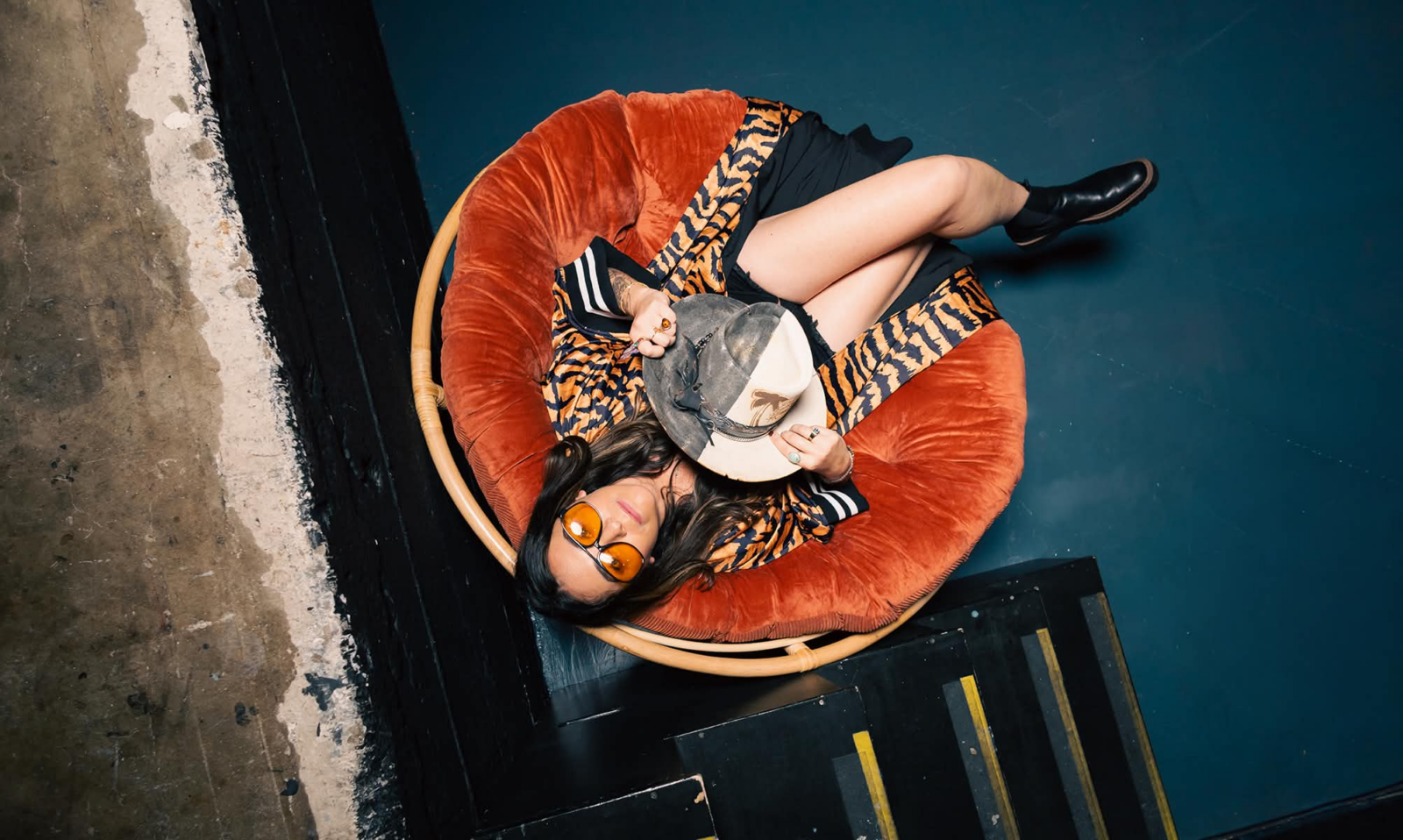
ST: You have a very unique voice. What do you do to try and make yourself stand out?
VT: With vocals, it takes years to find it. Whether you choose to do the work or not, it’s a lot of work to be a singer and to maintain your voice and take care of it. When I was younger, I took a lot of vocal lessons and learned how to sing. I was fronting rock bands when I was in my early 20s, so I was using my voice very loudly and powerfully. Sometimes the level dynamics just aren’t there, so you end up trying to overpower the band with your voice. I just started taking care of it a young age because I knew that I wouldn’t be able to sustain that. I needed to learn how to sing and where to sing from, and I think over time I realized where my voice nicely sits. I have a little bit of a deeper voice. I play a lot of my music on a guitar that’s tuned a full-step down, and I think it’s a sweet spot for me because it allows my natural voice to come out at ease. I think that was something I discovered within the last 10 years and I’ve just been honing in that craft to be able to sing, but also let a lot of it come natural rather than pushing. For me it’s the delivery and the melody too. I love when people can make a melody with just their voice and no instruments and I try to do that in my music. I’m obviously playing the guitar and writing those parts as well, but it’s equally as important for me to hear interesting melodies in the vocals. I’ve really worked on that to really try to create that in all these songs.
ST: I feel like a lot of artists today don’t want to be pigeonholed into just one style or genre of music. Do you think we are seeing more of an effort to blur the lines that define our music?
VT: I do. I think there was a time where—even for me coming up as a younger person in music—where people were like, “you really got to find your niche,” “stay in your lane,” “make that your thing,” and “the more you do that, the more people are going to know who you are.” I think there’s an argument to that for sure, but what it takes away from is the ability to create whatever’s coming out of you in that moment. So if you’re writing a country song, but you’re not a country artist, I think that’s okay. I think now more than ever, it’s just about being creative and being yourself. And if that’s the way that you’re leaning, and that’s what’s happening in this point in your life, then like put out the country album. I think it’s totally okay and I do see a lot of artists doing it. I’ve seen artists do electronic music to very folk music to harder rock in the same band and I think that’s really cool because it’s the evolution of the artist. If you’re continually putting out the same records, first of all, it’s sometimes boring, and second it’s not really representative of your evolution. I appreciate that that’s happening and I feel like that’s definitely happening for me too. I’m writing new songs that are very different than what I’ve put out thus far, and I think indie-rock is where I would identify it, but that umbrella is so big that it can go a lot of different ways and it could be a lot of different things. So, to me, I’m really happy that people are open to it, and I definitely feel that I am doing that as well.
ST: Speaking about your album, there was a lot that went into it — some of it personal, some more irreverent. What do you feel when you listen to the album? And what is the big takeaway that you hope listeners leave with?
VT: To me this album feels like a journey. It feels like it’s all connected, and it does go through a lot of personal experiences, but also some more broad thoughts as well. But I hope that someone can listen to it, start to finish, and walk away from it with a feeling of hopefulness. So the last song on the record is called “I Know Nothing” and it’s sort of an homage to the fact that you went through all these emotions and this learning on this journey to come to this point of realizing the older you’re getting, the less you know. As younger people we’re kind of like “I know everything. I know what’s going on. I’m smart. I’ve done all this stuff, but at the end of the day, when you really look at it, you really don’t know. It’s like unlearning so much of what life puts on you. I think underneath it all, there are these messages like “still be a dreamer,” “still be hopeful,” “believe in the magic that life has,” and I hope that people can kind of get something out of this record where they feel those feelings. There’s some darkness in it for sure, but there’s a lot of light too. There’s a lot of “hang on” and “open yourself up to love and life.” Hopefully, that shines through for some people.
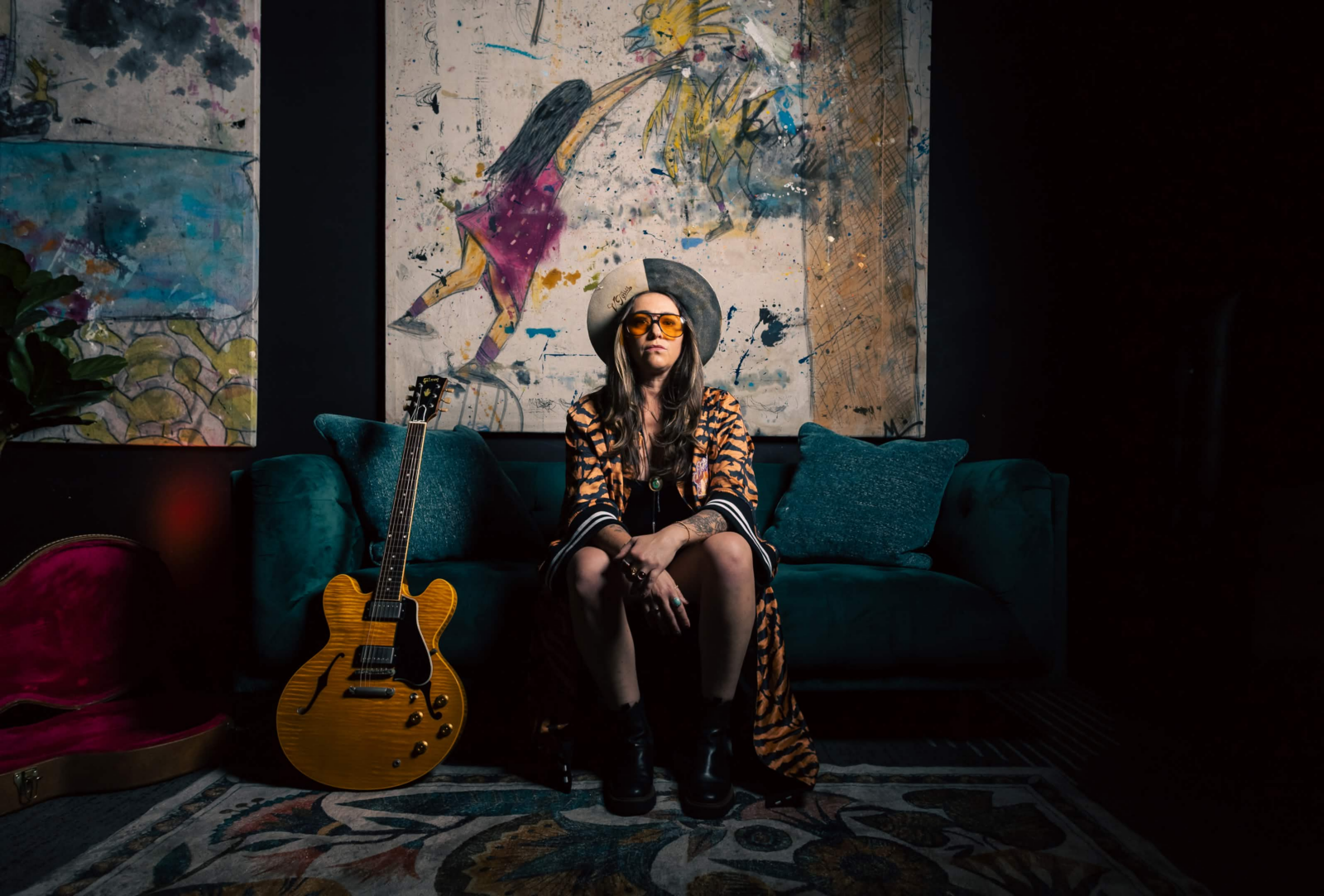
ST: The title of the album and lead track are both called “Woman,” so I wanted to ask if you feel your work is more outwardly feminine?
VT: I think that song particularly is very much shining a light on what it is to be a woman and the roles that women play, and sometimes feel like they have to take on, and the amount of work that goes into trying to heal yourself and your past. But I think that it still relates to everybody. That one in particular is focused on my journey of becoming who I am today. I think that in general, the whole record is open to a lot of different themes. I do think I called it Woman because it felt like the journey of the last decade of my life getting here. Of course, I am a woman and that is very reflective of my experience. But I also think it’s about being vulnerable and being open, and that could be genderless and relate to everybody. I think I definitely did get a little bit into my softer, feminine side. I do think we all have both of those sides, no matter what our gender is, and it’s kind of one of those things that’s a spectrum that we go back and forth on. Like how sometimes we lean more into that masculine energy, and sometimes it’s more feminine. So I do think there is a part of that that I leaned into to be open and vulnerable about everything, and to really kind of let that softer side through instead of powering through thing with a mindset of “okay, just get over it. Just do it.” This was more of a let’s stop and pause to talk about the feelings and how valid they are and where they’re coming from. So it definitely has elements that dig into that. 100 percent.
ST: On the opposite side of things, your latest single, “That Night,” takes things in a more carefree and fun direction. What was the theme and process behind it?
VT: I’m glad you caught that. I think I’m serious a lot of the time, and I wanted to sing about fun and exciting stuff too, and be a little light-hearted with this one. I was trying to capture that feeling, the moment in a relationship where you go from being friends to more than friends, or you just met someone and now you’re really interested in them and you’re taking the next step. There’s so much in that energy of excitement and anticipation and nervousness that I think is kind of like a fun place to be sometimes. Prior to anything happening or knowing the answers to anything, just having this element of possibility on the horizon and l how that feels. I wanted to just write about that moment versus writing about an actual relationship. It’s about how does this excitement, nervousness, anticipation feel? How does being open to the possibility of maybe falling for somebody and maybe going from a friendship to more than that feel when you don’t know exactly if that’s going to work out, but you don’t want to lose a friendship either. It was just kind of written during that time. I was going through that experience, and I wanted to try to capture the feelings of that specific moment when you kind of don’t know, and it’s just exciting.
ST: So, what is next after this?
VT: The album comes out Sept. 1, and there’s going to be another music video coming down the pipe and more shows. I’m working on setting up a tour locally as well as a few dates that are not totally solicited yet. But that’s what’s on the horizon and hopefully, I’ll see some people out there at some shows.
V Torres will celebrate the release of her sophomore album, Woman, with a special live performance at The Mint in Los Angeles on Sept. 19. Visit themintla.com for tickets and more information.
Listen to Woman below:
Written by Dan Offner
