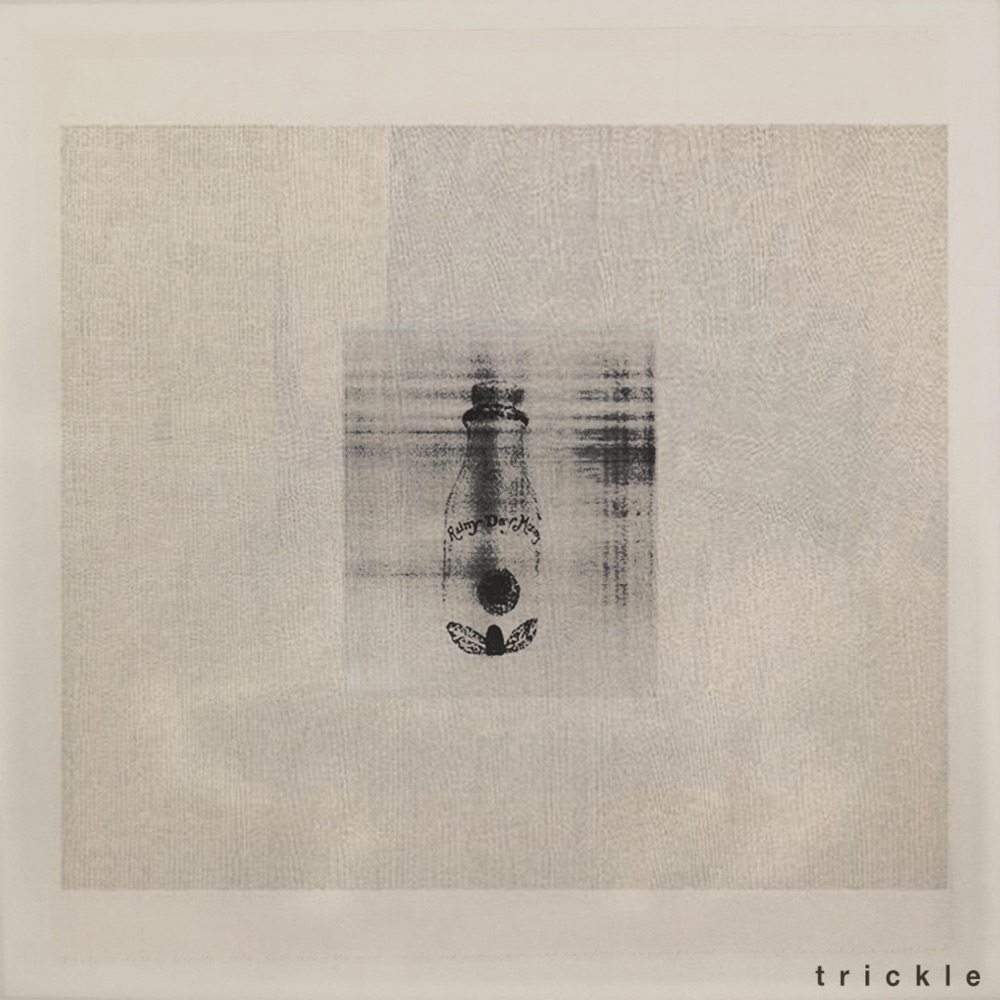
Trickle’s double single release of Rainy Day Money and Free Of Charge invites the listener into a visual story paired with intensely captivating instrumentals.
From Los Angeles, CA, Trickle is the solo recording project of Carter Victorio. The music is impressively recorded entirely to cassette and fills the space between slacker rock and experimental pop.
The first single, Rainy Day Money, has a strong electric guitar and drum combination, followed by a mellowed voice.
I’m looking down the barrel of a gun
I’m stuck in my playground with my bedsheeds still not done
The storyline follows the feeling of being stuck between childhood and adulthood, with profound imagery showing a contrast between a place where you’re supposed to play and a place where you’re supposed to grow up and take care of yourself.
I’m digging up a hole now
One that’s big enough for the two of us
I’m talking to you
The surreal imagery makes this song feel less like a straightforward story and more like being stuck inside someone’s recurring nightmare.
Finished off by an awesome minute-and-a-half outro with the instruments running wild, Rainy Day Money felt introspective and strong.
The second single, Free of Charge, starts off much more mellow, with a solo guitar strumming. A late-night drive, an almost floating feeling, this song contradicts the other.
I’m a bad stone
but I’m feeling alright
The phrase “bad stone” is unusual, because a stone is generally something inanimate, solid, and emotionally neutral. Calling it bad gives it a moral quality.
around here, I feel fine
when the sun’s down where the red light shines
I can’t hold in my bladder at night
I’ll let it go when I’m feeling alright
Nighttime can represent freedom from expectations, privacy, escape, or the opportunity to behave differently from how you would during the day. The ending shifts from the abstract idea of being a bad stone to something bodily and almost embarrassing.
This song feels like accepting an imperfect version of yourself, finding comfort in a particular environment and insisting that you’re okay despite some underlying contradictions. Its repetition makes that confidence feel either genuine or slightly forced.
Both songs explore a similar question: what does it mean to be okay when something about your situation and yourself feels fundamentally wrong?
Neither necessarily offers an answer, which is part of what makes the lyrics so interesting.
I loved the juxtaposition between the two, both lyrically and sonically, and have a few new songs to add to my playlist now!
Written by Emily Stabell
