
I’ve been thinking about writing a series about running a cassette label, but I never managed to sit down and shape my thoughts and experience into words. I’ve always wanted to share how I’ve been running the label since 2013. I don’t have a specific plan for the series, but I’d like to share some topics I find interesting. I want this to be a conversation with you, so if you find a topic or theme interesting and would like to learn more, let me know in the comments, and I’ll consider it for the next piece. There probably won’t be a set number of articles—I’ll keep writing as long as there are topics to discuss. I want to start with an article about why I chose cassettes. I’ve had so many conversations about why cassettes, and I’ve always been blown away by how much I needed to persuade people that cassettes still matter. I think this is especially true in my country, Slovakia, where cassettes were always something of the nineties. It somehow felt like people couldn’t really believe that cassettes could still live on, so this first article will be my testament to why I think cassettes still matter and why I fell in love with them.
Origin
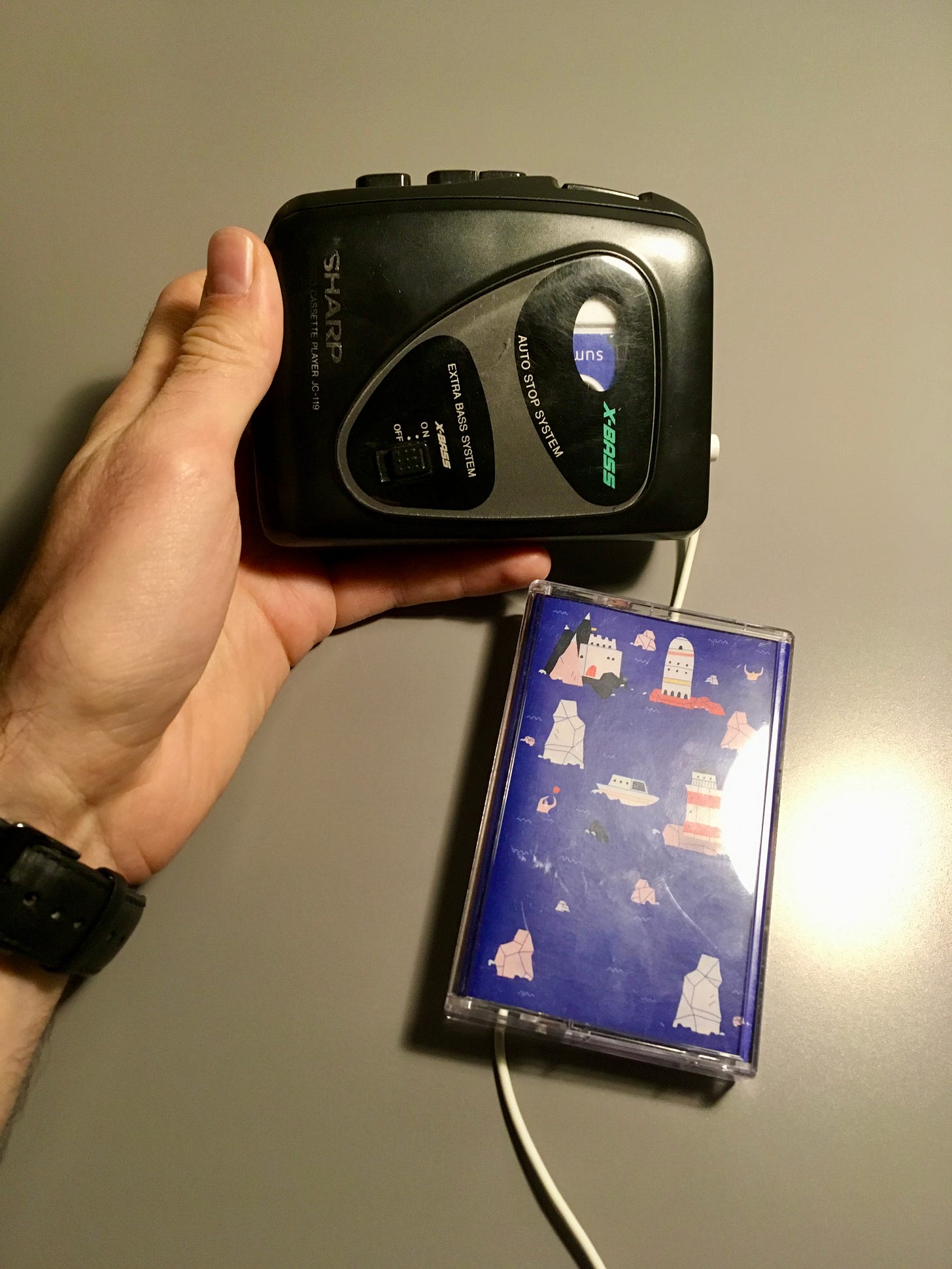
It started in early 2011 when I was searching on Bandcamp and exploring various genre tags to share music on my blog. I really enjoyed what I was finding. Many smaller labels, mainly from the USA, were releasing music on cassette at that time. For me, cassettes were something I grew up on and have enjoyable memories of, but to be honest, I was also surprised to find that there are still active cassette labels giving this format new life. I started to follow them more closely—what they were doing, how the cassettes looked—and even began ordering them. I loved the packaging. I loved the music. I loved that I could own a piece of music I could hold in my hands and actually wait for in my mailbox. At some point, I thought, I want to try it. I had no idea what I was doing. I was copying what they were doing, and that’s where it really started. I figured out that I could either make the tapes at home by buying duplicators and cassette decks or use a professional duplication service. From the start, I knew I was going into something very niche and with little experience. Still, somehow, despite the first months being really hard for someone based in Slovakia trying to release music from the United States or Britain, I was surprised that it worked.
At the beginning, I wasn’t really sure why I chose cassettes, but after all these years, it comes down to a couple of things I found attractive. A lot of things are pretty practical, to be honest, and some are just pure aesthetics. Let’s start with the more practical ones.
Size
Size is something most of us don’t think about, but cassettes are tiny so that you can put one in your pocket—for example, in your shirt or pants. Maybe you’re traveling and didn’t bring a tote bag or backpack to carry a vinyl, but you can fit a cassette in your pocket. This practical size is excellent, and size also plays a significant role when you’re shipping cassettes. When I started, Slovak Post had excellent rates for small packages, so I was able to send them worldwide at a reasonable price. Another great thing is that even if you make a hundred copies, it’s still a small box that you can store in your closet, which was the first place I stored them, or you can put them on shelves. You can easily have your full label—a couple of releases, a couple of hundred tapes—on one shelf. That was mind-blowing because I could run the label just from home, from my own apartment, which was actually the first place I ran it. So, even though it’s a prominent characteristic, it’s essential.
Price
Another factor is the price, whether you’re considering the selling price or the production cost. In 2026, it’s less accurate than it was back in 2013 when I started with cassettes, but making them is still relatively cheap. I would say it ranges around €5 to €6 per copy, depending on the length, design, and other features, but you can make 100 copies for under €500. For an ordinary person working a day job, it’s a budget you can find. To start a label and make your first release, you don’t need significant funding. In comparison, vinyl records start at around €1,500 for 100 copies. Over the years, the price went up—it used to be more accessible and financially viable—but still, in comparison to vinyl, it’s a better bargain. The lower production price gives you room to offer wholesale pricing, be more generous to artists, run giveaways, and maintain a healthy margin, making this more sustainable even in smaller quantities.
Design
I was never a designer, but I love design objects. I’ve always loved beautifully designed products for everyday use, and I realized that cassettes are beautiful design objects. Some of our releases were really simple because I was designing them and needed to learn how to make a cassette J-card. I was able to do it because the design is quite simple, and I love that. But there are so many different things you can do with cassettes, and I really love that. I was always trying to push it a little further, play with colors, and even work with designers who are better at this job. We’ve done so many color variations and different designs, and I haven’t even explored all the possibilities of cassette design. I really love that because there are always unlimited options. I always wanted to make even bolder design choices with cassettes, but sometimes I chose simpler, nicer solutions, which I really loved. It always made me excited to see the final version in my hands when they arrived from the duplication company.
Durability
One thing I find a little controversial is the complaint that cassettes don’t last long, get tangled, sound fuzzy, or get destroyed. On one side, I’m like, yes, that’s correct, but I also think this is what’s beautiful about the medium—that it doesn’t last forever, that it has its own life. You need to care about it. You need to be cautious about what you do with it. You treat it differently and value it differently. But on the other hand, cassettes are really durable: if they’re stored well and played on a well-maintained cassette deck or Walkman, they can last a long time, and you’ll be able to listen to them even after many years. I still have boxes and boxes of cassettes I purchased from other labels that I can play on any player. So the medium is durable yet fragile, which makes it even more beautiful and valuable in my eyes.
Scarcity
Something I find really attractive about cassettes is that not everyone is doing them. Maybe that’s less true than it was in the early 2010s, but it’s still something more niche, something not everybody’s doing or choosing to do. I always found that niche aspect of cassettes very attractive in a way—I always wanted to do something different from what everybody’s doing. I tried vinyl because I saw that everyone was doing vinyl records, and I did it too, but I always felt more joy and pleasure from doing cassettes. I found that feeling more satisfying than being the trendy one, the one always doing what’s popular or needed or wanted. Sometimes I feel like that’s what makes running a cassette label the most challenging job, because it doesn’t naturally attract everyone. Still, it’s also the most satisfying one, because you feel like the amount of work and care you’re putting into it is rewarded by the few loyal fans who are really into cassettes and care about the medium much more.
Sound
One apparent reason is the sound. Have you heard a great recording on a great cassette player with great speakers? I can tell you, it’s fantastic—the warmth, the slight fuzziness in the background, the unusual, different analog sound that you cannot hear anywhere else. Yes, vinyl records are better, I know, because I have a record player at home and a good sound system that I can actually enjoy vinyl records on in full. But when I play cassettes, I get chills. It’s something different, something that’s not perfect, something that’s warm but somehow familiar and closer to your heart. I don’t get this never-ending blame on cassettes for sounding really bad, because it was mostly—and I can say from my own experience—because of the really cheap players we used to have, and the cheap headphones we were using to listen to cassettes recorded on cheap machines, not really well. There are so many factors at play here, and people were judging cassettes based on the results, not on what they could actually sound like in a good environment. But I like that even cheap, fuzzy, unfinished, lo-fi sound that’s not perfect, and I love that kind of music in general, that’s not striving to be perfect, because I feel like there’s more soul and honesty in such music. I always love taking the cassettes I just made, fresh from the duplication company, putting them in my boombox, and listening to and enjoying something analog, real, in front of my eyes, playing and touching me.
Community
One thing I really enjoyed about cassettes was the community they created—whether it was cassette fans who were buying from us. I knew them by name, other cassette labels I was buying from, or maybe a label I aspired to or took inspiration from. I always felt like I was part of something bigger, a community that was forming. I found cassette fans are always more loyal and more caring about music, about the medium, about something more than just pure consumer reasons. But I also think about cassette shops in Japan that were buying tapes from us, always catering to a local community of people loyal to the medium and caring about cassettes. I found it really amazing that there are still people visiting shops, buying cassettes, and actually caring about a small cassette label from Slovakia. I loved being part of a wider community of people drawn to this medium, and I even tried to be more active and be there for each other. I love that aspect of it.
How to Run a Cassette Label
This is something I wanted to use as an introduction to why cassettes —and now I want to understand what you would like to read about: what you’re not sure how it works, how we’re doing it, or maybe something you never thought about. Let me know below, and I’ll try to tackle it in the following parts of my series, called “How to Run a Cassette Label.”
If you enjoyed reading this, consider buying a cassette from us to experience this medium and also support my mission.
Written by Filip Zemcik – mastermind behind labels Z Tapes and Start-track.com

3 thoughts on “How to Run a Cassette Label #1: Why Cassettes?”