
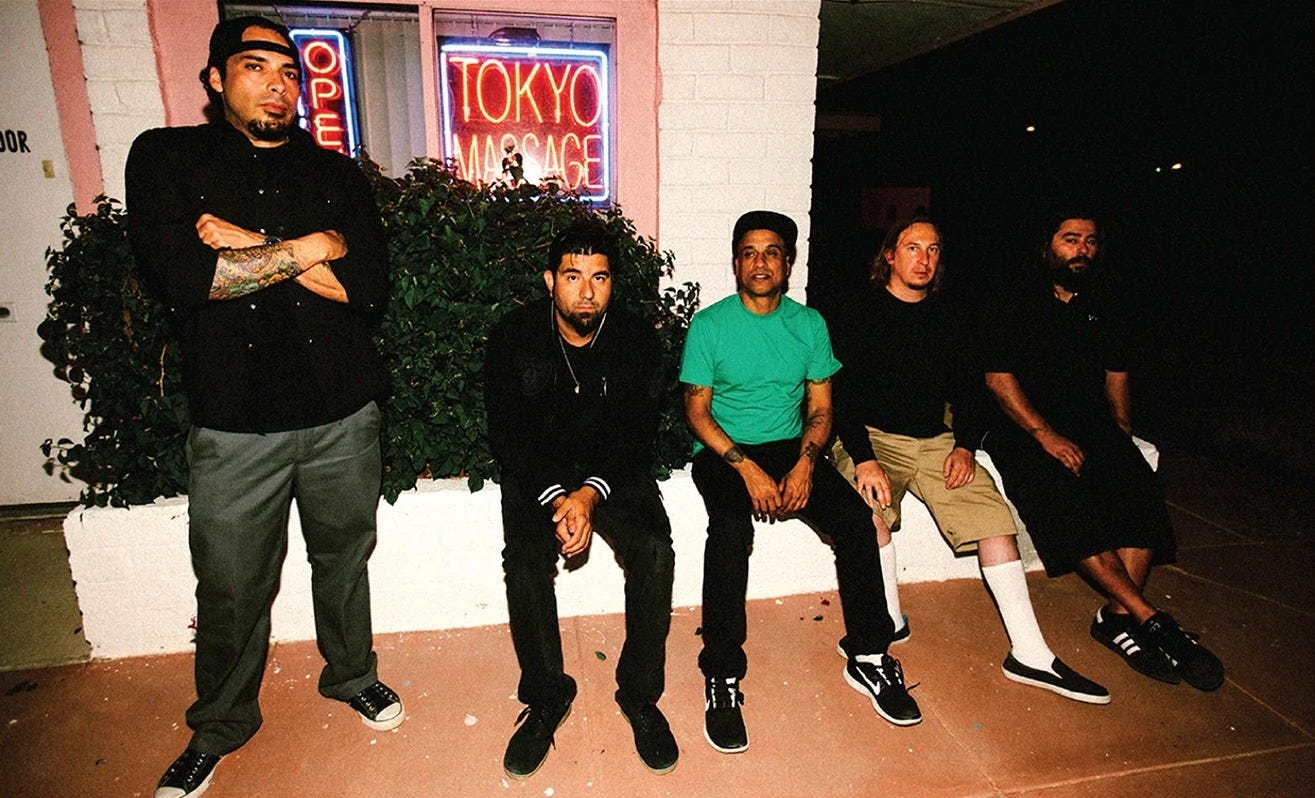
The way I see it, the Deftones have two golden eras. The first being ‘97 – 2000, the time in which they produced Around the Fur and White Pony, two innovative masterpieces of alternative metal during the boom of Nu Metal. The second is 2010 – 2012, the era featuring Diamond Eyes and Koi No Yokan, a pair of albums that modernized their sound and solidified their identity in the ever-changing metal landscape. With the help of producer Nick Raskulinecz and Bassist Sergio Vega, the band reinvented themselves into this impossibly heavy, doom-laden and atmospheric sludge that, quite literally, took over metal.
It might be hard to imagine now, but if you knew anybody in the scene during the release of Diamond Eyes and Koi No Yokan, then chances are they’d shown you a demo of theirs only for it to be a Deftones carbon copy. The band had essentially created a microgenre with the release of two incredibly consistent albums. That being said, it has been thirteen years since Deftones’ last 10/10 album, and with each new release, I find myself compelled to compare and analyze. So, with the drop in private music, we are once again at that point. This will be an exploration of the band’s post-Koi No Yokan work, and as I revisit each album, I plan to recontextualize, review, and reconsider every release in relation to the Deftones catalogue.
Gore
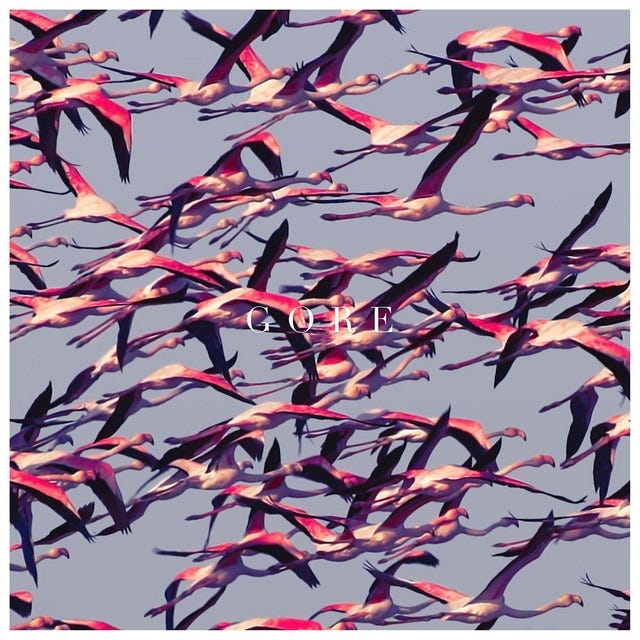
I had fallen down the Deftones rabbit hole somewhere around 2014/15. I’d dipped into their entire back catalogue, their rarities and b-sides, even singer Chino Moreno’s side projects. So, a new album was something I had been eagerly waiting for. After a couple of singles, I was ecstatic to finally hear the full album and listened to it constantly that year, really trying to force myself to like it. At the time, I thought it sounded incredibly clean, atmospheric, futuristic, hell, even psychedelic. Then I just kinda put it down, and haven’t really listened to it again until this year. So how does Gore fare almost ten years in?
To say it plainly, I think this is Deftones’ worst album, but all things considered, that’s an impressive feat for the band. Though it has redeeming qualities, it offers some of the band’s weakest material to date. They nailed a balancing act between atmospheric and sludgy on Koi No Yokan, but when it came around to Gore, the band moved onto a psychedelic take on progressive metal. To be clear, it sounded great on paper, but ultimately fell short. Still, I think one of the best parts of Gore was the new direction. The issue was that the songs just felt monotonous and uninspired, lacking that signature blend of urgency and suave which forms the core of Deftones’ unique style. Furthermore, the production is sterile, and despite it being full of little golden nuggets that make your ears perk up from song to song, it’s a passing feeling.
The opener, “Prayers/Triangles,” has an iconic intro riff paired with a memorable chorus that reminds me of something off Saturday Night Wrist. But it feels like a psychedelic rock song instead of a Deftones cut. “Doomed User” explodes with one of the nastiest riffs the band has ever written, but in less than twenty seconds, it transitions into an ‘80s-esque pop metal riff that completely loses the headbanging feel of the initial guitar as every string sounded like a sponge squeezed dry by a hydraulic press. These two songs are emblematic of this record’s problems. Most songs feel overwritten and drawn out, yet they only hover around four minutes on average. Meanwhile, Koi No Yokan’s gargantuan “Rosemary” reaches almost seven minutes and ends up being an album highlight while featuring heavy influences from doom and drone. The downfall of Gore is that the songs just feel boring. Maybe it’s just a me thing, but I get bored. There are too many riffs, not enough groove. It doesn’t feel like the band is writing together. The songs just aren’t cohesive. When it comes to Moreno’s performance, it’s better than I remember, but still weak compared to every other Deftones album.
Funny enough, it is the album’s most “boring” track that shines the most. “Hearts/Wires” is a clear standout for any Deftones fan as its eerie guitar floats under Moreno’s voice, building anticipation until a wave of distortion bears down on the listener like a sledgehammer. This entire song is a masterclass on the essence of Deftones. It exudes the band’s trademark mix of sexual tension and uncontainable fury. All while showcasing the whole band operating in unison, following a song to its natural conclusion. “Phantom Bride” is another highlight on the album and not just for Jerry Cantrell’s impressive solo amid the reverse-delay bridge. The whole song feels compelling, theatrical, and natural as it moves from section to section. The title track “Gore” has a really nice build thanks to Frank Delgado’s synth work and Abe Cunningham’s drumming. I remember the closer “Rubicon” being a big standout for me when the album was first released, but on revisiting it, it felt more representative of the record’s shortcomings. It has a straightforward structure and a catchy chorus, but like most of the songs, it is bogged down by a lack of identity. It just doesn’t have that elusive Deftones character.
Back when it dropped, I repped this album so hard because I was a kid who had just gotten into them. I didn’t want them to fall off now. This time around, it’s a lot clearer to see it was a bold creative departure from the brother sister records of Diamond Eyes and Koi No Yokan. That being said, it doesn’t make it a better album. It’s easy to say now that Gore is just disappointing compared to anything else in their discography, not for its creative decisions but ultimately its uninspiring and tedious songs.
It is also important to note the personnel on this album. Up until this point, Deftones have primarily worked with two producers. Terry Date, who produced the group’s first five albums, and then Nick Raskulinez, who worked with them on Diamond Eyes and Koi No Yokan. The band had a short stint with producer Bob Ezrin for 2006’s Saturday Night Wrist, but anybody familiar with the record would know that a majority of what the band did with Ezrin would later be tweaked, contorted, or rerecorded at the behest of Moreno with the help of Terry Date and Far’s Shaun Lopez. Personally, I would attribute a lot of the record’s success to the inclusion of Date and Lopez at the end of the development, as the result was so unmistakably Deftones that one would be forgiven for thinking that they never changed producers at all. Ten years later, Gore was the only other time that they worked with a producer besides Date or Raskulinecz, and it shows. Matt Hyde is a producer known for his work on No Doubt’s Tragic Kingdom, Slayer’s God Hates Us All, and others. While Deftones and Hyde have a history as he engineered Koi No Yokan, I think that a combination of the band attempting to change gears and working with a new producer resulted in the record lacking that signature Deftones feel, along with its other problems. On the next two albums, we would see the band return to Date and Raskulinecz, respectively, and to their success.
Ohms

Ohms was released in September 2020, smack dab in the middle of the pandemic. Looking back, it felt like a monkey’s paw wish. “You will get a new Deftones album… but only in a pandemic!” It was an odd time for everybody, but this release felt like a silver lining, a bit of a return to form for the alternative metal giants. Following the release of this record, it was clear that the pandemic had affected the recording and production, with Moreno’s vocals being tracked while he stayed isolated in Terry Date’s trailer. You can totally hear the isolation as Moreno goes wild on these songs. Date is a key inclusion on this record. With a history stretching as far back as their debut Adrenaline, he was the producer for their first five records, even having a hand in the turbulent production of Saturday Night Wrist, and then heading up their unreleased 2008 album, Eros. Needless to say, Date and Deftones were inseparable until Raskulinecz’s introduction in 2010. Date helped sculpt their sound on every release as they transitioned from their punky nu metal stylings to alternative metal and nu gaze titans. He was with this band at their most primitive and raw, and that is what he helped cultivate on this album.
The animalistic “Genesis” immediately sets the tone as the opener. The brooding drones of the opening synth are peppered with delay-drenched guitar, creating a snowballing sense of unease until the band emerges with a deafening roar. It feels like a “fuck you” to the Gore era and a rallying cry to fans of the first golden era of Deftones. The eeriness of White Pony mixed with the aggressive teething of Around the Fur, all coated in the doom-heavy feel of Diamond Eyes. This was a blessing for longtime fans. It was full of that Deftones character, which was wildly absent on their previous outing. Moreno’s screeches sounded crazier than ever as he squeals, “I reject both sides of what I’ve been told”. This completely sold me on the album. Months of cabin fever from being holed up inside felt like caked-on mud being shaken off with every headbang on my drive home from work. I’d forgotten how integral catharsis was to Deftones. That was what drew me into them as a band, the way they towed the divide between fury and sensitivity. “Genesis” was sending chills down my spine in the same way as Moreno’s unhinged screech at the end of “Royal”. As the chorus envelops the song and we hear Moreno’s clean vocal emerge as “Balance” echoes left and right, and at that moment, the band was working together like a fucking machine. It felt like a performance, not a song.
“Ceremony,” on the other hand, is a bit of a low point on the record. Haunting guitars prod my ears as Vega’s ever suave bass meanders comfortably over Cunningham’s prompt drumming, but the song falls apart with its honestly annoying chorus. Moreno sounds like a creepy magician as he whines, “It’s all an illusion”. This is only further hindered by the inclusion of Moreno’s counter melodies, giving it an unnatural, ethereal sound that only makes me want to skip the song rather than join in. Despite this bad showing, Moreno’s counter melodies are often mixed and utilized greatly everywhere else on the record, and I would point to them being a highlight of the album and an observational moment of growth for the group, too.
The following two songs are a little underwhelming as a whole, despite being full of really impressive parts. “Urantia” features some uncharacteristic guitar chugging by Carpenter that stands out impressively as the song flows between tense chugging and the release of massive chords as they ring out. “Error” features an indoctrinating Trip-Hop beat by Cunningham as Moreno coyly slithers over top. You can almost hear a faint smirk in his voice as he sings.
“The Spell of Mathematics” manages to pull me back in as it erupts into a headbanging anthem that eventually resigns itself to a sort of Anti-Chorus as Moreno sings “I put a spell on you” as if to harken back to the old blues classic by Screamin’ Jay Hawkins. Drawing a really interesting line directly between the two acts, almost 70 years apart. Also, juxtaposing the role of magic between the two very different eras. The final third of the song shifts into this bluesy number with claps and finger snaps really laying down a shifting rhythm. A sidenote for any Death Grips fans, in doing research, I found that drummer Zach Hill is credited as doing “additional finger snaps” on this song, and I find that hilarious in character.
The next three tracks mark a real high point in not only the album but Deftones’ post-Koi No Yokan career. “Pompeji” is an intimate and suspenseful track that explodes into the heaviest section on the entire record. It is reminiscent of songs like “Pink Maggit” and “Rosemary” in the way it wields distortion as a hammer slamming down onto the listener as Moreno screams the iconic “Jesus Christ, you watch us fail”. The way that the bass kicks in during the second repeat of the chorus is astounding; it takes something impossibly heavy and says, “Now check this out!”. “The Link is Dead” is just filled to the brim with a tense energy that builds and builds as Moreno goes absolutely wild in a way you’d find on the heavier cuts of either Diamond Eyes or Saturday Night Wrist. The fuzz-filled bass riff of “Radiant City” immediately sets the tone for the following song, as it’s another cut where the whole band seems to be working in tandem. These are songs that feel like they were written with just five dudes in a room together. The push and pull between every member feels natural and syncopated, not overwritten and fabricated.
These tracks are a fantastic representation of why I love Deftones: the raw catharsis, melded with calculated fury, all with a hint of tenderness. Meanwhile, the closer “Ohms” feels a bit more alternative rock than alternative metal. It sounds more like a Palms cut rather than a Deftones one, as it feels heavy, but they never quite get heavy, if that makes sense. After the highlights on the tracklist leading up to that point, it comes off as a bit of disappointment. More of a relaxing fade away than a celebratory burnout. Overall, this leaves Ohms as a massive step up from the wandering and uninspired Gore, but still, it has its own shortcomings. The flow of the album from song to song only hits its stride in the latter half of the record. Despite having a strong opener, it ends with a bit of a whimper. Date’s production captures a lot of their signature energy, but at points it feels reminiscent of older material rather than being forward-looking. It feels like Deftones, and it sounds like Deftones, but the band is at its best when they are expanding creatively, and while there are impressive points of innovation here, it doesn’t necessarily feel like they are completely uninhibited.
private music
In the five years it took for Deftones’ next record to come out, a lot changed. In early 2021, bassist Sergio Vega would part ways with the band after 10+ years. The reasoning for this departure has not been confirmed by both parties, as Deftones didn’t even make a statement regarding him or the situation. On the other hand, Vega mentioned in several interviews that the band’s management had refused to make him an official member after years of insinuating that he could follow the same path that brought keyboardist Frank Delgado into official status during the White Pony era. After years of working for the band as a contractor, writing, recording, and supporting almost four albums, he states his contract was cancelled during the pandemic on a call with the management team, and when negotiations started up again, they refused to improve his contract, so he left to work with his band, Quicksand. As outsiders, we truly don’t know what went on in the band, but losing Vega was a massive blow. Most fans had already accepted him as an official member, so to hear that he was purely a hired gun made his commitment to the band all the more impressive and admirable.
Vega was a huge part of their second golden era, joining during the writing process of Diamond Eyes, and his style would be instrumental in defining the new direction that the band was going in. Koi No Yokan and Ohms would feature huge atmospheric vibes, which I would, in turn, point to teamwork between Delgado and Vega as a massive part of. Not to mention his impressive inclusion of the Fender bass VI on Gore, adding to the album’s progressive and experimental tone. Vega’s role would be filled by bassist Frank Sablan in 2022. Sablan has been a touring bassist for several acts, including Marilyn Manson, Chelsea Wolfe, and Peter Hook and the Light. The bassist was also known for writing and performing in several projects dating back to 1993 with the band Crack’s first album Pooberty.
Throughout the last couple of years, the group had also experienced an unexpected rise in popularity due to social media and the resurgence of Nu Metal. Memes about Moreno moaning, or Deftones fans just being horny and depressed, were commonplace in online music communities, but even songs like “Cherry Waves” or “Sextape” became popular sounds on TikTok. Along with the Nu gaze genre picking up steam in DIY circles, Deftones 30 30-year influence on the music scene became quite apparent. This resulted in the band reaching a new, younger audience and with the help of a massive tour with fellow alternative metal giants, System of a Down, the stage was set for the band to make a big splash with a new album.
So, how does private music stack up in their post-Koi No Yokan catalogue? Good. Hell, great even. Whereas Ohms felt like a return to classic Deftones, this album felt fresher and more energetic. The first thing you’ll notice is how intense and immediate this record is, thanks to the return of Nick Raskulinecz. The drums sound like they could punch a hole through a wall, while the guitars sound like finely honed battleaxes clanging off each other. Sonically, this album sits somewhere between Saturday Night Wrist and Diamond Eyes. Razor-sharp guitars meet tender ethereal passages while working with a band dynamic that feels more Rock than Metal. These songs are heavy, but they don’t feel machined out; instead, they are almost punky and hardcore.
Another thing to note is that Moreno’s vocals are being pulled back in the blend by the way of Rich Costy being in the mixing chair. This is not necessarily a bad thing. I think it allows the listener to encompass the song as a whole rather than just being bludgeoned by Moreno, despite that being a dream for most Deftones fans. With that, these songs don’t sound as crazy and unhinged as some cuts from Ohms and Diamond Eyes, for example, but they still feel full of energy, just a contained and pointed type, akin to some of the heavier cuts off of Saturday Night Wrist.
It’s worth noting that with Raskulinecz producing and Costy mixing, this is the same lineup the band featured on Koi No Yokan. Yet, we almost get a polar opposite record. The songs are streamlined. The songwriting is direct and simplified. They don’t feel overwritten or overstay their welcome. The relationship between Carpenter and Cunningham takes full advantage of this, showing off their lockstep bond and ultimately ending up taking center stage in most songs. The opener, “my mind is a mountain”, for example, is immediately powerful in showcasing this during its intro, and in the verse, we see a galloping rhythm as Cunningham reframes Carpenter’s off-kilter doom-metal chugging. “cut hands” features a 19/8 rhythm with booming 808s while Moreno invokes something reminiscent of their early catalogue. The jilted guitars of “locked club” pound like a lumberjack slamming an axe. The pause between strikes builds an impending, almost monotonous feeling as Cunningham’s drumming rattles away between stabs of distortion.
Truthfully, I think the only songs that let this album down are the crowded and muddy “cXz”, the meandering “souvenir” and “ecdysis”, which comes off like an okay Gore cut. They don’t quite ruin the album front to back, but I never found myself going back to these songs, especially when up against the unrelenting “milk of madonna”, and the dramatic closer “departing the body”. On top of that, you have the endlessly catchy “infinite source” and the melancholic “~metal dream,” which both draw out a cathartic yearning from the deepest recesses of my chest. Both of which are full of Saturday Night Wrist’s eerie beauty and irresistibility, in the style of “Hole in the Earth”.
The release of private music is what sparked this line of inquiry, with the big question being, is Deftones back? And I think they haven’t quite left, but they are not yet at peak performance again. That being said, with this album, they are making big steps. Their songs feel more cohesive than both Gore and Ohms, and are more direct and purposeful. After diving into Ohms again since private music’s release, I was in the mindset that Ohms was perhaps better than private music, but I am not convinced of that now. Ohms feels like a heavy, three-course dinner, while private music feels like a lean, curated meal that left me thinking, “I could have for the rest of my life”. Ohms is an exhausting thriller, but private music is an action movie.
Sitting at a 91 on Metacritic, private music is the band’s highest-rated album ever, and while critic scores don’t amount to much, it’s important to recognize a shift throughout the music sphere during the band’s three-decade-long career. Koi No Yokan sits at a respectable 86, while White Pony sits at a mind-blowing 72. Critic sentiment seems to favour the group’s newer material, and while for me it doesn’t quite reach the same highs as White Pony or Koi No Yokan, private music engages in a rich freedom and directness present in their sound during periods like Around the Fur, and I think that is a very good sign for the future of Deftones.
Written by Lando Flakes
