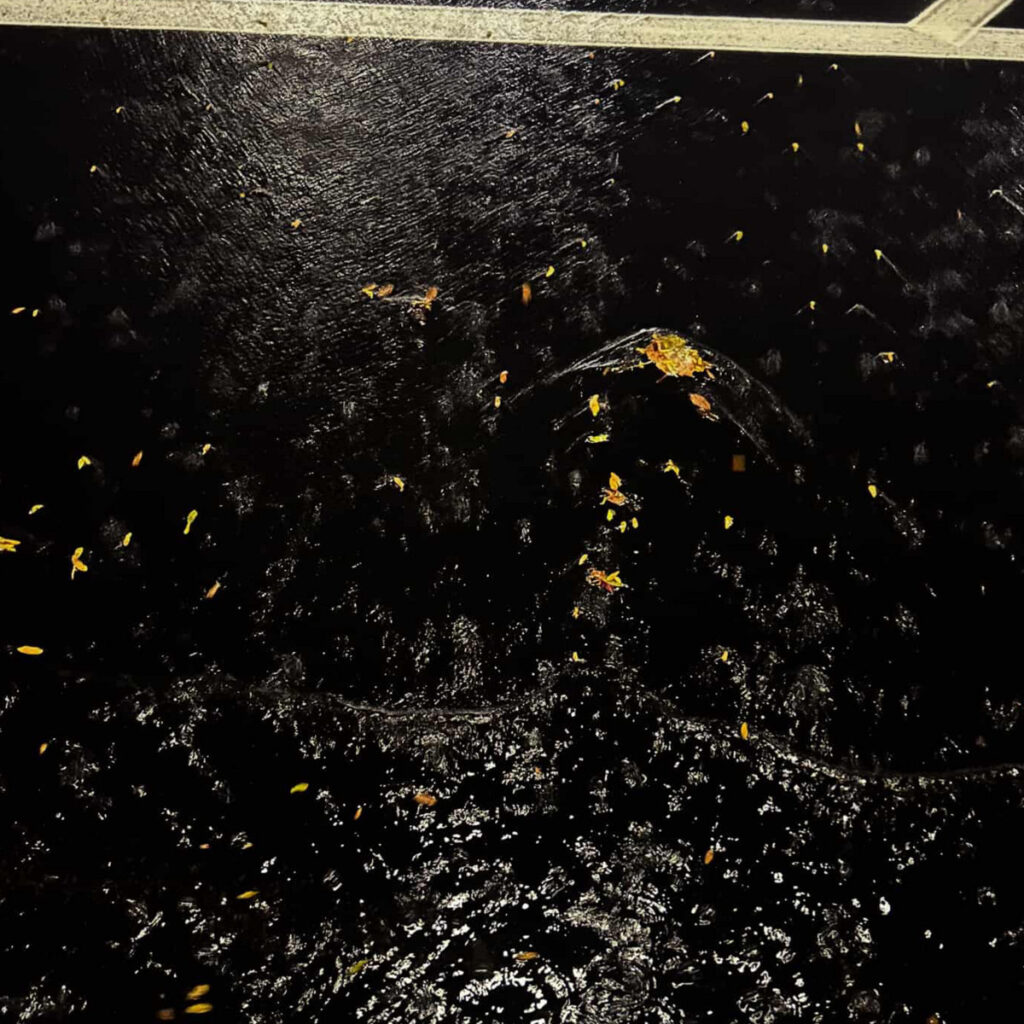
We’re welcomed to Big Weather’s self-titled debut album with “Thaw”, with many sonic references that immediately put you at ease. Everything on this project feels close. You can hear the cracks and crisps of the drums, the hands on the instruments, and the words spoken to you like a car ride you know only is headed to somewhere safe. The pedal steel makes for such an easy ground to settle into, and while it reads all the way from dreamy to twang (like on the second, very short track “Bloom”), it’s a constant you appreciate right off the bat.
The cover art has a homely and almost rustic feel, even though it’s just a top-down picture of a rainy parking lot. It feels like the album has a deliberately ethereal feel to go against an industrialized, urban world. The five-piece band mentions it’s a love letter to Chicago. It might be 28 minutes long, but it stays with you long after. Because of the way the album is constructed, I’d say it’s one of those things where you listen to three songs in one sitting. They might be short, but even if the project is written from two songwriters’ points of view, they’re almost conversational, like completions of each other.
The project is a very focused sound through and through, managing to give us a very clear picture into the world they offer. Songs drift into each other seamlessly, like from “Ashland” to “TIACATFS” and then “Turtleshell Guitar”, where we’re guided with a constant, even waning, but not ever-droning chord. It feels like being guided to a clearing hand-in-hand with a person you trust a lot. Transitions don’t only exist in the musical sense, because there’s even moments where the only thing accompanying you between songs is the subtle sound of crickets like on hot summer nights.
The second half of the album features a change from fully ethereal to a quieter lull, especially on the fruit-flavored songs “Strawberry” and “Melon”. We see some synth elements, as well as whistling from one of the band members. On the subject of produce-related talk, it’s also where I realized the album reminded me of Peach Pit’s slower songs, with whispered singing and the occasional chorus of the band. Unlike most though, Big Weather cuts a path for themselves in bite-sized packets of home, coming at you the way things do when you’ve found a spot for yourself in this world, if only momentarily.
I’ve always seen debates over if a title track lands best last, first, or anywhere else on the album, but on this record — and, might I add, especially for a quick, 28-minute detour we’ve just gone on — “Big Weather” being second to last feels so appropriate. It’s different to the energy we’ve seen thus far, and it’s clear why it bears the name of the album and the band. It’s neither an overhaul of what we’ve seen, nor an abandonment of the calm that invited us in, but it is the moment you might get a little tearful over finally being able to rest.
“Wildflower” is what we’re left with afterwards. A piano-centric ballad, as tender as any of the other songs here, is the only one that truly struck as a goodbye. I might be on a whim here, but after hearing a whole album about slow and forgiving ground, the closer reads — in title and feel — as a reminder to keep moving, to flourish wherever you can, and the inherent loneliness of doing so.
For the people who love ambience like Phoebe Bridgers and the likes of intimate soft rock with a confident amount of folk/country feel, this is the project for you. It’s refreshing to see bands that wear it proudly, especially in circuits where there’s such an aversion to mixing or even referencing any semblance of Nashville or anything someone would box into “country”. Self-described with inspiration from bands like Wilco, Big Star, Neil Young, and Whitney, I’d say they’re absolutely right.
Take a listen to Big Weather below.
Written by Charlotte Lacambra
