Something fun’s always happening in Brooklyn, right? Despite the encroachment of finance bros in Williamsburg, the gentrification of Crown Heights spreading toward Canarsie, or the rising rents in pretty much every neighborhood, the borough’s still full of amazing art and culture. Take – for example – the Brooklyn Choir Project, an 88-person vocal orchestra performing songs by Brooklyn’s best indie and underground artists. Those artists have to audition, of course, but if selected, they get the opportunity to play a live show with a whole chorale arrangement behind them.
One of those artists looking forward to such an opportunity is Brooklyn-based Fleur Geurl, a.k.a. Danielle Sorokin, originally from Fountain Inn, South Carolina (about a half-hour southeast of Greenville). In December, The Brooklyn Choir Project will add their voices to “stone in the stew”, the first single from Fleur Geurl’s new album 11:11. The record contains eight tracks of Sorokin’s intricate musical arrangements, all of which mix folk songwriting, acoustic warmth, and sonic layering to create mystical and atmospheric fantasias.
11:11 follows Fleur Geurl’s previous works Jupiter Return (2023) and 2019’s “Mud Pies”, building upon Sorokin’s explorations in songwriting and music arrangement. The new album’s tracks feature nuances in sound that create a largeness, while the softness of the vocals and instruments allows for intimacy and for the quiet intensity of Sorokin’s songs to unfold. Fans of Sufjan Stevens and Fleet Foxes will appreciate her style.
The title of the album has great symbolic meaning, as most associate the time with great spiritual power, making it a great moment to wish for or manifest something. Of course, when it comes to wishes made at 11:11, the rate of return is very low. On the title track of her record (which closes the record), Sorokin sings the Latin phrase “Factum fieri infectum non potest”, which means “That which has been done cannot be undone.” Then, she sings: “I wish it could.” This acceptance of the inability to change fate, as well as the yearning to still do so, forms the emotional core of the album: Not all wishes come true, and instead of expecting immediate gratification, it takes true reflection in order to transform into something greater.
“If this was easy you’d go off and leave, but I’d put up one hell of a fight,” Sorokin sings on “it’s alright”, “and if I could change things you know I’d be screaming.” The yearning bleeds through this song into “if not, be still”, a song brimming with passion and want for companionship: “Bleed if you must but I’m on my way, hanging God out to dry / Don’t you know that I’m always here to kiss, to kiss.” The acoustic guitar pairs well with the piano, violin, and Sorokin’s layered vocals, forming the voice of the song’s hunger.
Where the album dives deep into despair, Sorokin’s descriptions and metaphors of it are quite vibrant. “apple” relates Sorokin’s relation to sin and its side effects, wanting to feel clean: “From the hand that should feed / Heart that should beat turned into nothing / Suck the rot out of me / I’d give anything.” And on “in my years / the dragon”, Sorokin explores her relation to her adopted home of New York and its ability to chew people up and spit them out: “Truth be told it never mattered, swallowing me down before I pulled my iron / Even more, the feeling after; I don’t mind it anymore.” (As someone who also moved from a small town to the great beast of NYC, I can relate.)
But 11:11 offers moments where the despair gives way, and Sorokin presses upon the importance of collaboration in order to survive. “stone in the stew” refers to the European folk tale of the traveler who arrives in a starving and miserly town. The traveler convinces them that they are making a soup from nothing more than a stone and water, but comments that the stew would be better with a piece of meat, some carrots, and other ingredients. Becoming curious, the townsfolk bring ingredients to the soup, turning it from dirty water into a nourishing meal. All the while, the town begins to understand the meaning of community, companionship, and selflessness.
In “stone in the stew”, Sorokin makes herself the stone, showing gratitude for the people who have supported her throughout her journey as a musician or in her travels from South Carolina to New York. She sings of how thankful she is to be part of such a community of artists and friends: “I’m the stone in the stew; how lucky to gather all of you up.” One might read this lyric as Sorokin defaming herself, making herself the least nutritious or valuable ingredient in the soup. In fact, the stone was the most important ingredient, the flashpoint for the community coming together. If anything, Sorokin is the traveler in the story, compiling the lessons she’s learned over the past few years of her journey and trying to make sense of them through song.
Of course, it is the concept of community now giving back to Sorokin, as Brooklyn Choir Project adds their voices to “stone in the stew”. While the album was mostly the work of Sorokin and multi-instrumentalist Harrison Park, now Sorokin has an entire room full of singers performing along with her, bringing the message of her music to life: You can’t always just wish for good things at a specific time and hope they’ll happen, but if you work hard and are very kind, then they just might.
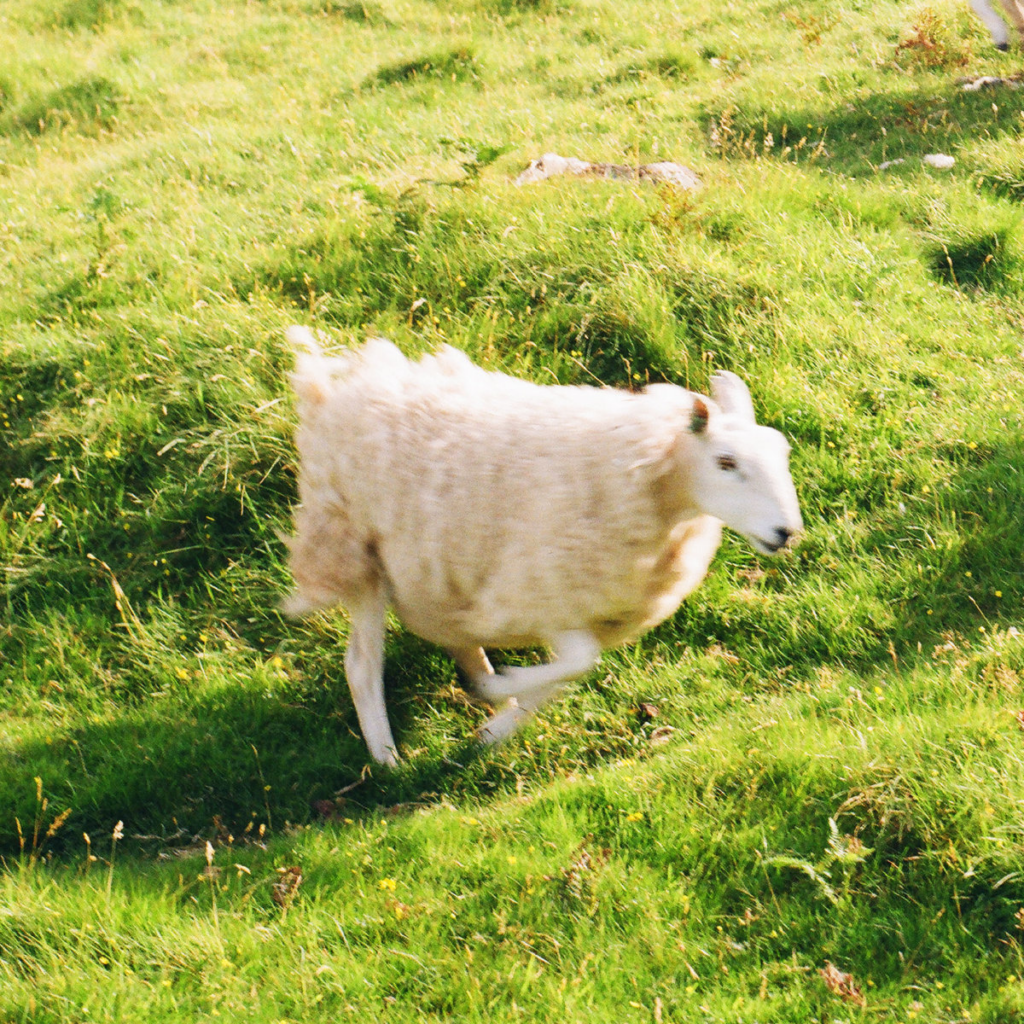
The cover of 11:11 features a young lamb running through a field. It’s hard to place what this means. Perhaps the lamb is running towards home or away from it, or towards an opportunity or away from danger. Perhaps it saw a nice tree casting some good shade and just wants to take a nap and escape the waking world. Any reading seems to make sense, but one has to wonder if the lamb dreams of what they’ll become when they grow to become a sheep.
Take a listen to “stone in the stew” from 11:11 below.
Written by Will Sisskind
