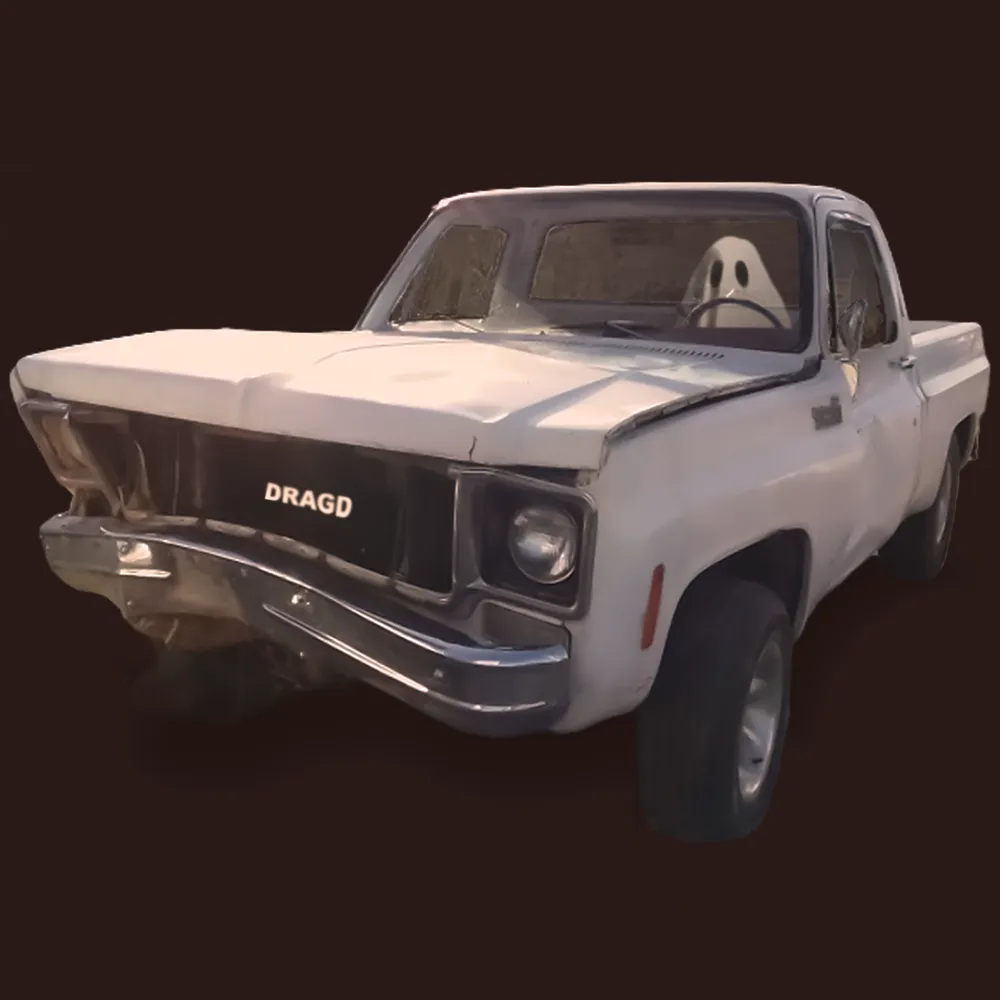
I think that humanity likes to harp on things that are doomed. We talk about death a lot, as well as loss; we spend so much of our lives clinging to things until they’re threadbare, and that includes our relationships, our bodies, and our memories. Of course, it also includes the small things. (I’m currently typing this post on a MacBook from 2015, and I refuse to get a new one because despite the dust under the keys, the tinny-sounding speakers, and the battery on its last gasp, it works just fine for me.)
Despite this general ignorance about the self-destruction of all things, Dragd bring it front and center on their debut record I Don’t Think I’m Gonna Make It. The St. Louis band have put out eleven slow-burning tracks dripping with melancholy, dancing on the border between emo and shoegaze, sucking up and spitting out the darkness from that narrow chasm. It’s the culmination of three years of work, which began when David Shanle moved back to Missouri after soul-searching in the California desert. This led to a reunion with his old friend Chris Thomas, to whom Shanle little demo of “Haiku Teleport”, which became the lead track on the new album.
Shanle and Thomas brought in friends Ian O’Leary and Danny Blaies on bass and drums to help round out the rest of the lineup, taking Dragd from a long-distance demo project to a higher level. The band used St. Louis’s historic Lemp Brewery rehearsal spaces to track the record, calling in Zack Hames (another friend and fellow Kansas City musician) to mix and master. The result is a sound that echoes with heartache, with big emotions bouncing around in a vast and empty space, making even quiet moments sound intense.
Intense moments of any volume are common on this record, and when the band wants to let them explode, they let the roof fly. Because this album is about processing loss and grieving a broken relationship, and because it’s hard to manage the emotional byproducts of those coping mechanisms, there are moments where the reaction fizzles in the form of overdriven guitars and shredding vocal cords, where every drum beat threatens to smash a window, and where the bass rumbles such that it challenges the pits of Hell themselves. But in the quiet moments, despite their intensity, one might imagine themselves having a drink while laying on the floor of their apartment in a moment of deep introspection, wondering where everything went wrong.
“Haiku Teleport” kicks off the album, showcasing both the intensity and shimmering repose to come throughout the rest of the album. It’s a mesmerizing introduction to the themes of the record, especially when it comes to mental untangling (“If I wasn’t so jet-lagged I’d burst into tears / Been speaking in haikus for most of the year”). That leads into “Impasse”, a slow jam in which the words direct more faith toward a wine bottle than a waning relationship. “I Don’t Want You (Around)” has no other lyrics besides the words in the title, making frank their determination for things to end; the parenthetical “(Around)” is an interesting touch.
“Ornament” plays with experimental reversed sounds at the beginning to give the track a dream-like feeling; however, by the end, the band launches into full emo territory, with screaming vocals and crash cymbals closing out the track as the full weight of betrayal in the relationship becomes clear. This continues on following tracks “Limp” and “Hold Me Under” (which picks up the tempo a bit), as the lyrics start to turn toward the vengeful, describing the ways in which the two sides of the relationship hurt each other and could potentially hurt each other more.
The climax of the record comes on “When It Goes Away”, a five-and-a-half minute opus to being at the end of one’s rope. In this song, both sides of the relationship are barely hanging on to themselves, and while there’s shreds of wanting to return to old ways and old love, there’s acceptance that doing so would just lead back to a doomed place. There’s a nod to addiction here, especially in the lyrics at the end: “When you’re turning back to old ways on a bathroom floor, when it goes away…” These words hit as the music reaches a fever pitch: It’s the moment where falling off the wagon feels like a good idea. But then the music fades, symbolizing the realization that turning back towards the doom will lead to an even worse outcome. There’s no good outcome, in fact: However, it’s easier to push forward in the long run.
I Don’t Think I’m Gonna Make It is powerful musically and interesting psychologically. The title suggests defeat, but it does in fact give off a little wisp of hope. Perhaps in the post-relationship state when everything feels like it’s beyond repair, there’s no going forward: However, there’s always a chance for evolution. If one way of life feels doomed, there are other ways; better ways, in fact. And though we mortal souls might fret about what we have to lose, none of us know what we might do if we actually lose it.
All of those emotions and fears come through in dragd’s debut, and through their examination of the end of one love, they pose a curious question: Is it worth it to cling on to something that’s so clearly falling apart, or is it more worth it to scrap the whole thing and start anew? When do we look at a broken relationship and say “Enough is enough?” When do we find ourselves in a mess sprawled on the floor and decide it’s time to change our lives? When do we look at the things that drag us down and realize it’s time to cut loose?
The stench of doom will linger either way; one must do what they can to survive in spite of it.
Take a listen to “When It Goes Away” from I Don’t Think I’m Gonna Make It below.
Written by Will Sisskind
