The lives we lead are all impacted by the various events that test our character and define our boundaries. Whether it is in our upbringing or how our conflicts have resolved, it all affects the way we handle stress, accumulating to our present selves which we hope can handle the unexpected future in healthy and manageable ways.
You Can’t Plan For This, the third Cold Wrecks album, is a reminder that such factors heavily affect our navigation of our own mental health and aspirations. The album encapsulates experiencing some of life’s biggest transformations: Entering parenthood, handling losses, and actively surviving in an ever changing world in spite of doomsday attitudes. Clocking in at a little under a half hour, Cold Wrecks succinctly interprets their experience with these lifelong lessons through their pop punk energy and desperate yet eloquently written lyrics.
Cohesion makes this album more than the sum of its parts, as it relates various tracks to one another and shares with the listener how their themes are so closely knitted in the narrators’ lives. The lead track “Dirt” is an introduction that sets a bleak mentality, with depictions of crawling in dirt over a slow distorted guitar riff. It builds up sustained tension before seamlessly launching into “Trick-or-Treating”, the second track, which is a mix of the familiar Cold Wrecks pop punk energy and a new type of melancholic despair. The verses narrate the uncharted emotional environment, delivering inner dialogue stemming from unresolved or unspoken conversations, or as reactions to feeling lost and isolated during a parent’s last days in the hospital. The song is dynamic, with steady guitar riffs throughout the verses and a strong use of isolated dual vocals to depict despair (“declaration that I’m crashing”) before building up into the chorus. It evokes a childhood memory, a somber pairing with an abrupt and painful ending.
Cold Wrecks has always boasted a good use of dual vocals between the primary lyricists (rhythm guitarist Mike Vizzi and bassist Craig Shay). But in “Halfway” they take it to another level, with lead guitarist Matan Uchen contributing their vocals to remind the listener of the various sentiments imposed on the narrator. (More on that later.) The panning of the three lead vocals superbly emulates a live performance, with the repeated mantras accessible to anyone that is able to relate to a familiar frustration.
As the folks in Cold Wrecks navigate their lives, they reflect on their upbringing and how their respective histories contribute to their present and future. Life is full of beginnings and endings, and as the lyricists enter parenthood, they reflect on their upbringing through the haunting lyrics in “Dirt”: “We crawl through the dirt like it’s all that we’ll ever know.” This sets a scene of being at the bottom of the proverbial food chain and the stoical acceptance of this placement in the world. “Try Harder” confronts the lyricists’ upbringings with that same feeling of acceptance, while asking for efforts of compromise and change for the benefit of the upcoming generation. “Halfway” digs deeper into the dialogue between different generations and their attitudes towards accountability. The lyrics refer to a God, a Mom, and a Dad, all of whom refuse criticism for mistakes and demand undying gratitude for the gift of life. One can’t help but wonder if the implied dynamic between generations are being held parallel to the relationship between a higher being and the humanity beneath, and whether such a relationship becomes assumed with the delivery of life itself.
Alongside the imagery of crawling through dirt is the metaphor of finding safety and warmth in the familiar embrace of a cocoon. While the lyrics depict a shelter of being wrapped up safe, there is an incredibly vulnerable statement of being afraid of stagnation and being unable to rise to strength. That growth is more urgent than the safety from the unknown. The album closes with “Wings”, repeating not only the lyrics of “Dirt”, but also the desire for growth in “Cocoon”. We can feel the desired change that “Cocoon” was looking for, as the lyrics move from a reluctant acceptance of past mantras to a willful flight to reach unimagined heights. “Wings” revisits the acceptance that stagnation comes from an imposed mentality during upbringing, but reminds us that despite the current dystopia and the normalization of intolerance, that there is a drive that brings us all closer to spreading our wings.
Songs like “Lost In Space” revisit feelings of guilt and shame that come with an inability to share our inner thoughts and issues in healthy ways. Regardless of the types of trauma or the upbringings our community may share, it is fairly common to be overwhelmed with the ever-expanding thoughts we generate to cover our ever expanding world view, including questions about our own worth, values, and capabilities. As we feel any sort of inability to properly express ourselves, it’s natural to feel isolated and suspended in an endless void of thoughts and assumptions in fear of being perpetually misunderstood, similar to being lost in space. The lyrics depict a feeling of defeat as a result of a perceived time limitation or a certain comfort of being held in suspension. In spite of the aforementioned struggle, the song is able to perfectly convey these complicated thought patterns in two and a quarter minutes.
With the passage of time that separates the mentalities of different generations, we are all subject to disruptive life events that raise a litany of questions about our own character. The title track “You Can’t Plan For This” captures a looming motif within the songs of growth and navigation. It depicts a difference in mentality between two generations and their approach towards their respective lives: One dedicated to busy work and seeking success and progression to cope with ambiguity, and the other seeking detachment from the constructs of a structured environment. In a way, these attitudes dictate the trains of thought surrounding the way we handle things like love or loss. In such events, we may question our own perspectives and tendencies, contributing to the growth that is present throughout the album.
While Cold Wrecks may be considered a mix of pop punk and emo, each song delivers a unique energy through their instrumental arrangements, especially through the way the drums (CJ Dunaieff) amplify the urgency of the guitar riffs or build up to choruses and moments of exasperation. There are songs that pair chant-style verses along high energy instruments like “Try Harder” and “You Can’t Plan For This”, pairing high energy with frustration. There are sweeter and slower songs like “She Smiles at Ghosts”, which describes anxiety surrounding parenthood, yet declares a hopeful determination to abstain from past mistakes. “Your Last Drink” (with brilliant saxophone by Maya C.) is an upbeat ska song that encroaches behind a pop-punk/emo introduction, depicting the handling of logistics and unemotional protocols during an otherwise emotional situation that may not have received sufficient time and support. With its diversity in styles, the album maintains strong consistency, and each song contributes its appropriate energy to the album in full.
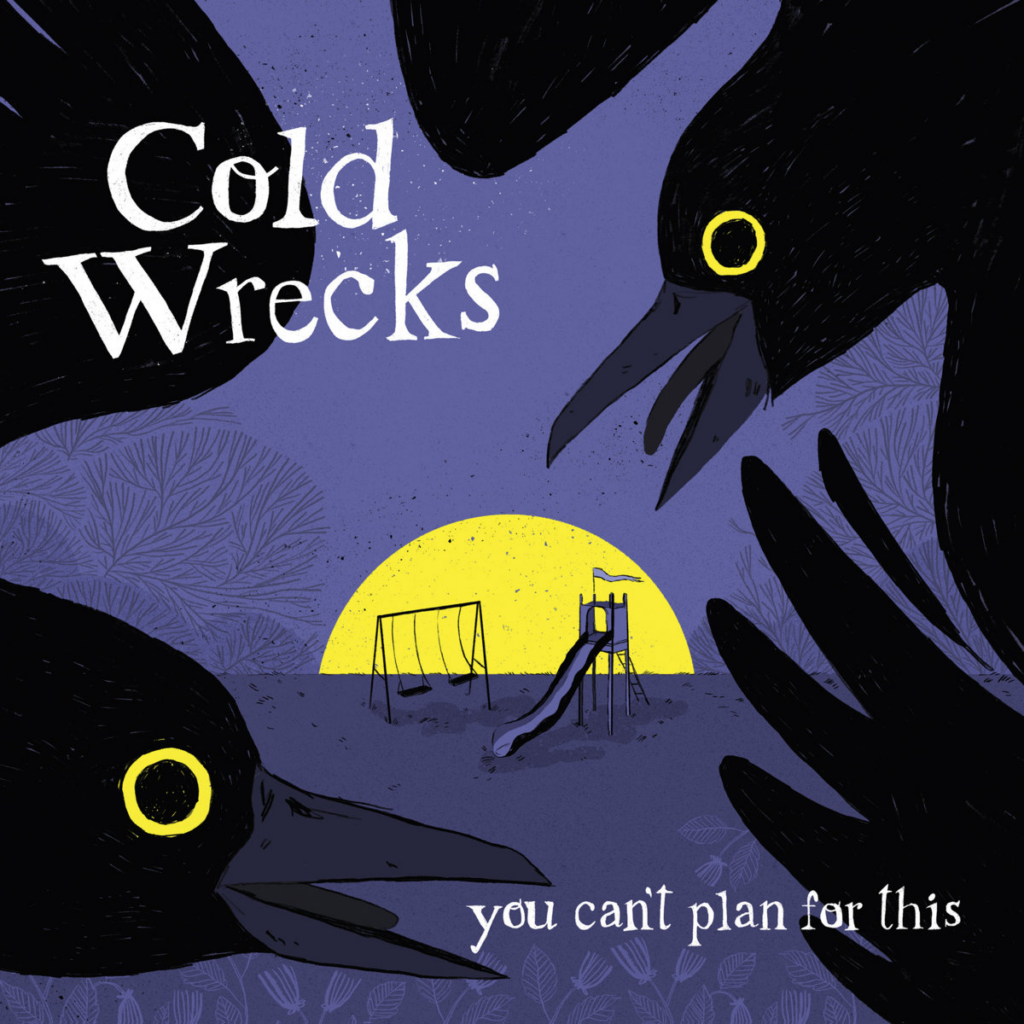
The album cover (by Brittany Fetcho) works incredibly well with the cohesion of the album. The crows, playground, composition, and color palette all synchronize with the album’s themes of death and new life, as well as the somber setting of dirt and living on the ground under a world of soaring entities. The light over the playground feels hopeful, that the new generation may be the light that this world needs to embrace, and the contrast between the sky/ground with the light feels like the contrast in the varying styles and moods throughout the album. Cold Wrecks has a special way of delivering a heavy heart through the way they sing about their vulnerabilities and their lyrics feel inviting to an audience that covets big emotions.
The songs on “You Can’t Plan For This” are the perfect soundtrack to an intimate pop-punk show in the middle of a snowy winter day in Brooklyn. They contain multitudes of mental images, wrapping the listener in a carefully crocheted cocoon of riffs, emotional melodies, and honest poetry of the way they share their lives with their families and communities. They remind us that despite what life has yet to show us, and despite how we can’t plan for this, we will be able to thrive as we grow our wings.
Take a listen to “Trick-or-Treating” from You Can’t Plan For This below.
Written by Christian Ang
