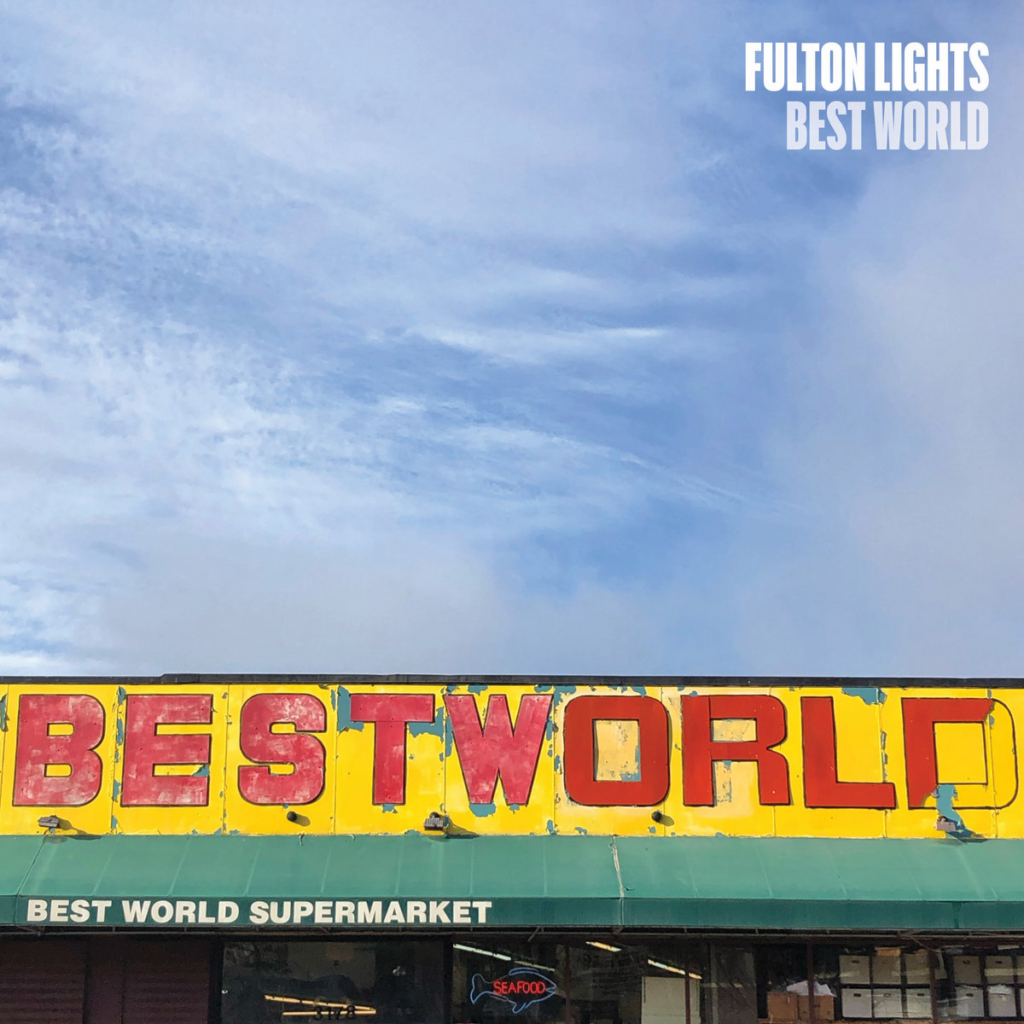
We have been waxing positive about songs from Fulton Lights’ new album Best World for the last several weeks, and now the full record is finally out in the world for all to enjoy. It’s hard to come up with more to say about the album that what we’ve already said about it, so we thought we would sit down with Andrew Spencer Goldman — the brains behind Fulton Lights — and let him dish about his new work in his own words.
Over email, Goldman shared how he rediscovered his way while creating Best World, how the songs all came together, how spirituality inspired him throughout the process, and how it feels to be creatively restored.
This interview has been lightly edited for clarity and readability.
WS: This is your first full album release since 2018’s Moonwalking Into The Future. How does it feel to put out a new LP after so much time?
ASG: This wasn’t an easy one for me to do. I kind of lost my way for a minute. I think because of that, I’m really trying to focus on how amazing it actually feels to have done it and to be able to share something with the world that conveys what I set out to do. I’m stopping to smell the roses.
WS: The new album contains the title track, the Well the Night Has Come EP, and three new songs. When writing those new songs and choosing to include them on the album, did they influence how you heard the other songs?
ASG: I think I knew when writing these that they all fit together somehow, but it took a long time for that to really come into focus for me. A lot of the songs hatched out of my stumbling onto an alternate tuning that I really loved. But until the lyrics were there and the songs were a little farther along in the recording process, I didn’t really have a way to fully understand that. For a while in the process you just sort of understand the differences, but it takes a bit of stepping back from it to really understand that these are all related to each other.
WS: You’ve described the record is about “trying to hold on to things in a world that won’t hold still.” When did you realize that was the thread running through these eight songs?
ASG: Not until I was nearly finished the whole process and had time to reflect on the themes that were there the whole time.
WS: Who or what were your biggest influences during the creation of Best World? Were there any new influences that surprised you?
ASG: I have a hard time knowing how to answer questions about influences. For me the biggest influences were my family — my wife, my kids — and everything that is rolled up in that. Love, fear, time, death: Those are the primary colors of influence, and then it’s a question of how they’re blended and what gets emphasized. Musically, I don’t really set out to write things based on influences; they just sort of emerge, often more than one at a time. Not everybody does it that way. Some people set out to write a song that sounds like someone and then another song that sounds like someone else. I can’t.
In terms of surprises popping through, the two biggest mysteries for me on the album are “The Wild is Wild,” which I guess sounds sort of like if Tom Waits and Jim O’Rourke got together, and “A Little Bit Low,” which… I don’t even know. The intro and outro of that song are kind of in the Morricone/Earth/Dead Man universe of sound, and then the main part is… not? Both started just as figures on the acoustic guitar with a vocal melody, and they went to pretty far out places.
WS: “A Little Bit Low” contains the religious symbolism of the pomegranate seeds and the 613 mitzvot. How would you say your spirituality (or spirituality in general) affected your writing of the album in other ways?
ASG: This question is probably better for someone else to try to analyze. I don’t know that there is anything in the writing that immediately reads as “spiritual” in any kind of conventional way. But love is spiritual. Gratitude is spiritual. Creativity is spiritual. Wanting to make the world better is spiritual. As I’m saying this, I’m realizing that these sorts of things cross religions and theories, but they are pretty deeply embedded in Judaism, which is part of my DNA.
WS: “The Wild Is Wild” is about the mysteries, frustration, and freedom of creation itself. The album stemmed from having a lot of unfinished songs and finally getting convinced by TJ Lipple to book studio time. What was the first session back in the studio like? What emotions did you feel while creating these songs?
ASG: On the first day of recording I felt like I had just returned home after a long time away. I also felt like finally I was letting something go that I had been holding onto for too long. Starting to record helped things flow in all the ways that you hope when making something.
WS: Now that you’re on the other side of the album’s creation, how do you view the relatively dormant period before you began creating it?
ASG: Necessary. I don’t think I could have made this record any sooner, both for logistical reasons but also, I think I actually needed to be where I was with everything in order to get to the point where I am now. Sometimes things just take a while to percolate, and it’s important to allow that to happen. I was beating myself up about it for a bit, and in retrospect wish I hadn’t.
WS: After releasing an EP and now an LP, do you feel you’ve found yourself back in a creative rhythm?
ASG: I at least feel creatively restored, if that makes sense. I am glad to be at this moment where — with the help of all the people involved — I finished something and now get to share it. And I’m excited to see what comes next. I have tons of snippets of ideas captured in voice memos, other ideas I’d like to explore, things I would like to do next. We’ll see.
WS: The first Fulton Lights album came out almost twenty years ago. How do you feel your music and your writing have changed or evolved over the course of your career?
ASG: There are plenty of threads that I think connect everything from the first record through Best World. But maybe these days, there’s a little more depth and precision in the writing, a little bit less of the broad brush strokes or and splatter, except where very intentional. I was thinking about the paintings that spoke to me that are in the artwork of the album, and maybe there was something about the combination of heart and mastery of form that I found alluring, and maybe something I sometimes have found myself aiming for.
WS: We ask this of everyone we interview: Is there any advice you would give to an artist/musician/songwriter just starting out?
ASG: Make sure that you are doing the thing because you love the thing, because you need to do the thing. Don’t do the thing because you expect X or Y. Find the joy in doing it and hold onto that.
WS: Is there anything else about the album you’d like to mention?
ASG: To anyone spending time with the record, please accept my very deep and sincere appreciation.
Take a listen to the title track from “Best World” below.
Written by Will Sisskind
