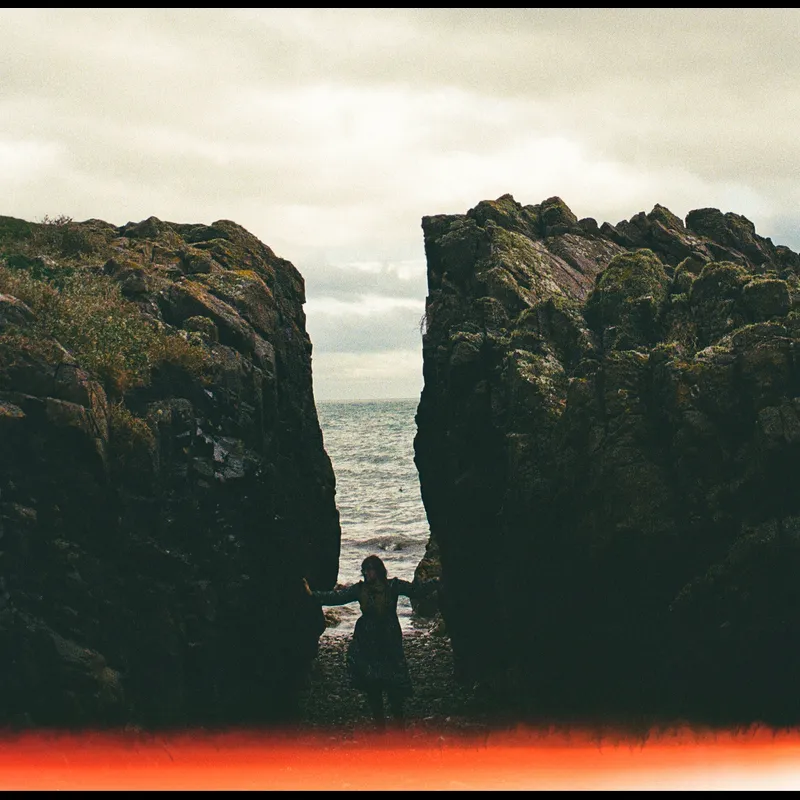
Change always carries its own kind of emotional weight, especially when you can feel something shifting before you fully understand what it means. “Middle” inhabits that heavy, paralyzing space where the familiar begins to blur, but whatever comes next feels too uncertain—or too painful—to face just yet. There is something deeply disorienting about losing your sense of where you stand while knowing you cannot remain suspended forever. Laura Ampersand captures this tension with stunning precision within this piece, inviting us to sit in it.
“Middle” is, above all, an experiential journey. A sense of deep emotional truth permeates the music, as though Ampersand is speaking from within the moment rather than observing it from a distance. Her singing moves between soft, intimate phrasing and more emphatic passages, constantly shifting between restraint and release. The piano follows that same expressive movement, shifting from percussive staccato to softer arpeggios that mirror the voice and seem to move with it, rather than simply accompanying it. There is a clear spiritual nod to Regina Spektor and Fiona Apple in the whimsical phrasing and theatrical piano-driven sensibility. Drawing on elements of Baroque and Chamber Pop, it feels fitting, then, that Ampersand describes her genre as “un-pop.” The instrumentation deliberately creates an intimate, claustrophobic space, folding an ornate sensibility into the accessible framework of a classic pop song.
The production is meticulously precise, with every element sounding crisp, dynamic, and almost tactile, making the instruments feel within reach. There is a warmth and clarity to the mix that feels like sunlight breaking through at sunrise, giving the arrangement remarkable dimensionality. Alex Borwick’s mixing and Pete Maher’s mastering preserve that contrast between intimacy and expansiveness.
“Middle” is out now, and it is worth sitting with for a while. The song may leave us in the middle, but time, and life, will inevitably push us forward. Take a listen below.
Written by Daniel Puelma Day
