I feel that in my most recent write-ups, I’ve waxed a lot about how the world doesn’t feel great these days. And that won’t change in my hundredth post for Start-Track. But as much as I’ve fretted about the state of the world, I’ve also noted that I’m not alone in feeling like everything has had a bleak streak as of late.
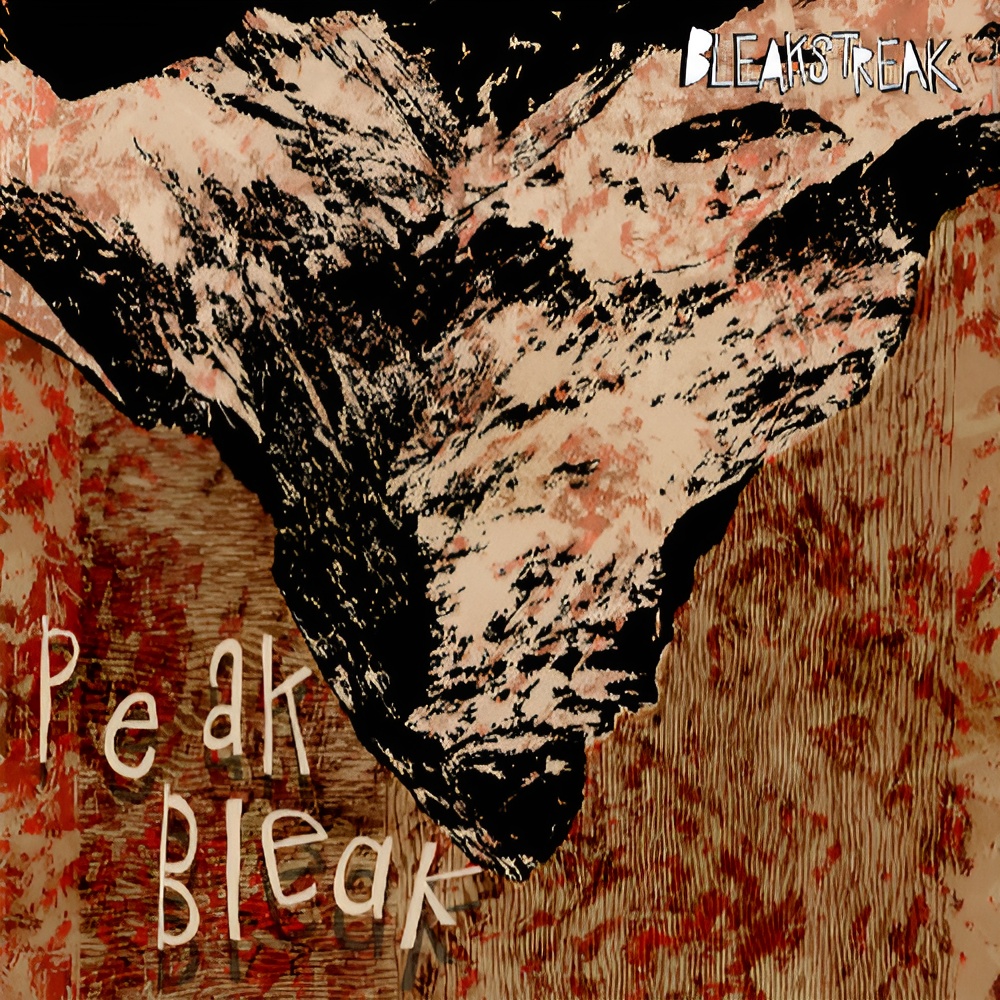
Speaking of “bleak streak”, Bleak Streak – the punk band out of Stockholm – have put out their second album Peak Bleak today, in which they pour all of their feelings of sorrow into their music. On this musical journey through the lows of life, this trio brings forth a sound much bigger than the sum of their parts, with their DIY tunes sounding like they came straight off a cassette tape found in your cool friend’s basement.
The band consists of Daniel Östborg, Melody Almroth, and Lars Harefjord, all of whom have experience with other bands but came together to form Bleak Streak as a playground for their own musical interests. In 2024, they released their debut self-titled album, which got a nomination for Rock Album of the Year at Manifest, the Swedish indie music awards. Peak Bleak continues where the debut left off, with the music sounding bigger than ever, but – for the best – certainly not shinier.
Things kick off with loss on “Gosh!”, or “Jösses!”, which is the closest approximation in Swedish. The song is a tribute to Harald ”Jösses” Sandberg, a friend of the band and a legend in the Swedish punk scene. He passed from cancer, leaving a hole in the hearts of those who knew him. On “Gosh!”, Bleak Streak perform a fiery opening track commenting on those who left this mortal plane too soon, and their effects on those who knew and loved them most.
In keeping with the commentary on the bleak state of the world at large, “The World Is Your Boot” exudes rage at those who don’t mind bending the knee to oligarchs, authority figures, cops, and others who bring violence and pain to the world. It’s a song that embodies the idea of “I hope the leopards don’t eat my face.” “Bootlickers of the world / There’s enough boots to go around / So why are you so mad?”, the lyrics go, laughing at those who didn’t think they would one day get shoved against the wall in an age where no one’s safety is guaranteed.
Bleak Streak pay homage to fellow rhyming name musical act Snail Mail with their interpretation of her 2016 song “Thinning”, which she wrote after an eight-month stint with bronchitis. Where Lindsey Jordan’s original track kept things slow but still covered in a thick sludge, Bleak Streak speeds things up in true punk fashion to play up the anxiety of feeling like things are slipping away.
On “Sad Cute Punk Rock”, Bleak Streak sing their ethos: “Fight the power / Do it crying / Those who act tough / They are lying”. Of the song, the band says: “We just play sad and cute punk rock that no one likes, but it’s fine because we are doing our thing for our own amusement first and foremost.” On the album’s title track “Peak Bleak”, the band play into the self-awareness of their cynicism: “When everything is going wrong / I was right to fear it all along / My bleak has finally reached its peak”.
“Imposter”, which runs nearly six minutes long and is “the longest song ever written by Bleak Streak or any of us personally”, builds with realization. It explains the feeling of having imposter syndrome, fearing that others will discover your lack of expertise or that you never had the expertise to begin with. But toward the end of the song, there is the realization that everyone suffers from the same fear. The faster tempo, louder volume, and eventual scream of relief comes from letting out all the anxiety, knowing that everyone is bullshitting and it’s silly to take anything so seriously.
“I’m Not Jealous” touches on other negative feelings: Jealousy, as the title suggests, but also competitiveness, childishness, and rejection. Melody explains that previous personal relationships inspired the track,
On “Same”, Bleak Streak introduce some rootsy sounds, as the song has to do with roots. Lars explains that while “Same” in English means a lack of change, it refers in Swedish to a person belonging to the Scandinavian/Russian indigenous Sami people. Lars found out a few years ago that he was of Sami descent, which he says “on a subconscious level might explain a sense of rootlessness I’ve felt throughout my life.” However, as the lyrics go, the introduction of a new part of his identity didn’t change anything about the present: “My past has changed, I am still the same / I was given roots, but it was too late”.
And then, after the gut punch of “Same”, things seem to get a little silly on “Loser Band Plays På Tisdag, På Torsdag”. In the spirit of The Replacements, an inspiration for the band’s sound, Bleak Streak decided to put a one-take jam of experimental jazz smack in the middle of the record. It may sound like disorganized noise, but that’s the point. The song takes its title from an instructive jingle from a 90s Swedish kids TV show. One might imagine someone totally burned out in their bed staring up at the ceiling with reruns of this show streaming on their laptop and this shuffling beat playing in their mind like a cluttered mental soundtrack.
“Dork Shadows” pays homage to something they once heard Twitch streamer Hasan Piker say, which went along the lines of “The world is run by evil dorks now”. It refers to oligarchs and self-proclaimed “disruptors” such as Elon Musk, Peter Thiel, Sam Altman, Jeff Bezos, and so on, all of whom have used their money, influence, and penchant for cruelty to degrade the world in their image. How far will these fuckers go to reduce the world to “Peak Bleak”, one might ask? We can only imagine that as long as they have capital and fresh blood on which they can feast, the limit does not exist, and these dorks can crawl through the shadows for as long as they allow themselves to live.
Towards the end of the album, Bleak Streak wrap up the topics they’ve covered in the penultimate track “Loser Band Plays Rock And Roll”. The track covers the fear every indie band has had: Playing their hearts out on stage and watching as one by one, audience members bail from the function, until they’re performing for an empty room. But no matter how bleak it feels, and no matter how many nightmares the rejection causes, the band keeps getting after it, because the alternative – a life without music, without public expression, without some sort of identity – feels even bleaker.
“Take Care Of Me” (Dark Pt. III), the final track on Peak Bleak, references – and sounds much like – the band’s song “Dark” from their debut album. It caps off the feelings of sadness with a testament to defeatism, repeating at the end: “I am giving up / I am giving in”. Over a chord progression that sounds more positive than the words accompanying it, Bleak Streak reflect the beginning of the record on “Take Care Of Me”: On a record that started with grief over loss, the band wonders at the end what makes life worth it for them to carry on.
If anything, the point of music like Bleak Streak’s is to provide comfort and companionship in hard times. Even at “peak bleak”, when one might feel like they don’t have friends and everything in the world has caved in around them, one must recognize that the same hardships befall everyone, and there’s always someone out there who will commiserate in kind and provide an ear for listening or a shoulder for leaning.
Peak Bleak is at the same time the ear that listens and the voice screaming into the pillow. On their sophomore album, Bleak Streak have condensed the pain of having to live in these stupid times into twelve warm, fuzzy tracks that they might argue are anything but. I don’t know, though. I sure felt better after listening to them. And maybe you will too.
Take a listen to Peak Bleak and follow Bleak Streak on their socials below.
Written by Will Sisskind
