New Place are an indie rock group hailing from the Isle of Guernsey, comprised of Reuben Esterhuizen, Charlie Stevens, Alex and Kristian Queripel, and Zach Ellis. Before 2020, the band had a different sound and had been known for casually playing across Guernsey. Coming out of the pandemic, the group paused and reflected over the course of their writing and recording process. The product of this period is the Garden Songs EP, their 2025 release drawing inspiration from indie and progressive rock, with tendrils of shoegaze also lingering in the music.
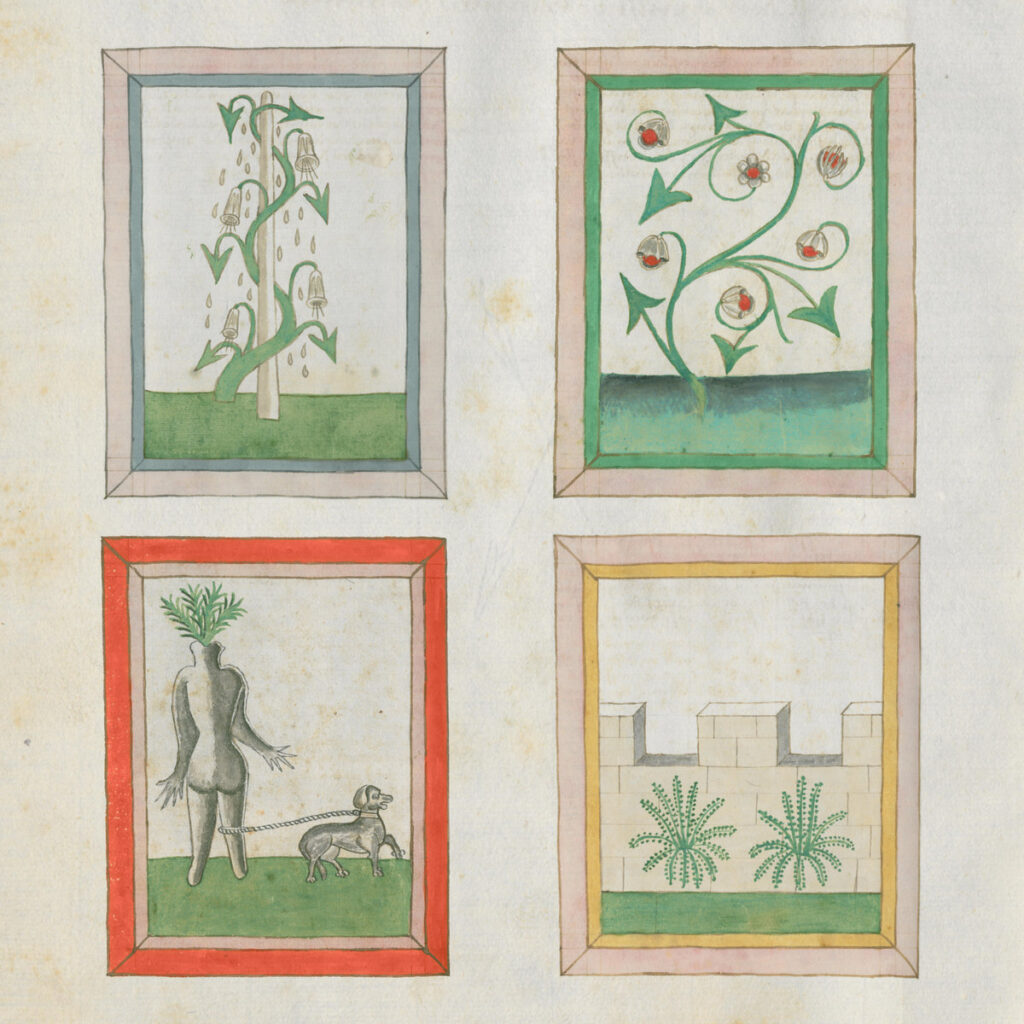
Guitar and drums are cradled in reverb against the backdrop of raw vocals from Esterhuizen and Stevens. Their work is enriched with the inclusion of visual elements, such as the EP artwork featuring intricate botanical illustrations by medieval physician Johannes Hartlieb. It’s an introspective project pondering feelings of lingering grief, reflections, and human connection in poetic lyricism. In the group’s journal, the act of collaboration is apparent, detailing each member’s contributions over the development of the EP.
“Garden Song” is our first taste of New Place’s second chapter, a sprawling 7-minute piece. The guitar is the highlight across the entire track: It picks up, distorts, and knots itself into taut riffs before wailing out in a crescendo at the end. Across these songs, there are consistent themes of wanting to be enveloped by nature, referencing the soil: “Take me into your garden, hold me and let me sink into the ground”. Garden Song highlights the ability of being able to create beauty through pain and being an antidote. In the group’s online journal discussing the journey of the project, they write that most of this song came from a single jam in 2022, beginning with a single riff guitarist Zach Ellis had written beforehand. Traces of Death Cab For Cutie and Coldplay’s Blue Room EP are discernible in the lyrics, with the similar sentiments Mazzy Star so delicately melts into melodies. The last line is a play on the line “Objects in the mirror are closer than they appear”. It’s a saying seldom mentioned in music but excellently placed here, conveying that often an issue or solution can be more attainable than initially imagined. A highlight is the one-two-three waltz tempo of the finale, an idea of Stevens directly inspired by Billie Eilish’s Happier Than Ever.
“The Wall” picks up on the sound “Garden Song” leaves, with distorted, lopsided chords starting off the track in a way that reminds the listener of Hozier’s last record. The lyrics surround unrequited feelings, in lines such as “And I tried to call you, but you hear nothing”, along with those that convey a rejection of modernity and an embrace of nature. In the journal, the group says the song came out of the near end of a Summer 2023 rehearsal, highlighting the repetition of the chorus and how it has a “bludgeoning effect”. The chorus takes on new meanings across the song, from the way it’s sung to the initial first chords, all the way to the strings and Mellotron picking up for the finale.
Streaks of mourning permeate the penultimate track “The Mire”, with the lyrics at first grappling, then reluctantly accepting distance from another. Stevens is the driving force behind this one: According to the journal, he came into a 2022 session with the line “Well, I came home to a memory of what must have once been a beautiful dream”. It’s a standout on this project for the wistful melody and lyrics about what could’ve been of a relationship, and how it culminated in its end.
It’s a turbulent revelation, starting out grappling in a fervor, with lyrics such as “There’s always something between you and me”. The guitar and Mellotron feel as if they’re in denial of this, battling with one another. The next time the line is sung, it’s a surrender. It’s reminiscent of “Soul and Fire” by Sebadoh which grapples with the slow deterioration of a relationship, detailing the inevitable differences between partners. A particular excellent line to describe it from the journal: “The song doesn’t revolve. It sinks.” Guitar and Mellotron start out together before the latter rings out at the end, creating a constellation to the next song, “I Love You So Much”. Clocking in at seven minutes, it takes on a lullaby-like quality, with clear and unfiltered vocals repeating the title. At first it doesn’t need a loud instrumental to deliver its sorrowful meaning: Esterhuizen states in their journal that this was a prime example of his songs being difficult to adapt to the sound of a full band, as the rest of the members believed the finality of the guitar ringing against the sounds of clamoring drums was necessary. The line takes on different meanings while blooming, blossoming, drying, and crackling under pressure. At the end, however, the line (once again so softly sung by Esterhuizen) almost reclaims its initial confession. The last line of the EP rings with truth, if you will.
Garden Songs is an excellent beginning for New Place. There’s a solid air of certainty in these songs, the companionship between members bleeding through the material. Their thorough, years-long commitment to their new sound shows them experimenting with instruments, creating distortion amidst intricate lyrics linking the reality of melancholic sentiment to metaphors of nature. The next chapter for the group has yet to be announced, yet it’ll be worth the wait.
Take a listen to Garden Songs below.
Written by Mira Dhillon

